
My vanilla layer cake recipe with buttermilk uses cake flour to create a fine and tender crumb and a tablespoon of vanilla for lots of flavor. I use the reverse creaming method, which creates an even layer and avoids the pitfalls of overmixing the batter, by coating the flour particles with fat before adding the liquid. This cake is fun to make, great to serve, and perfect for your next birthday party.
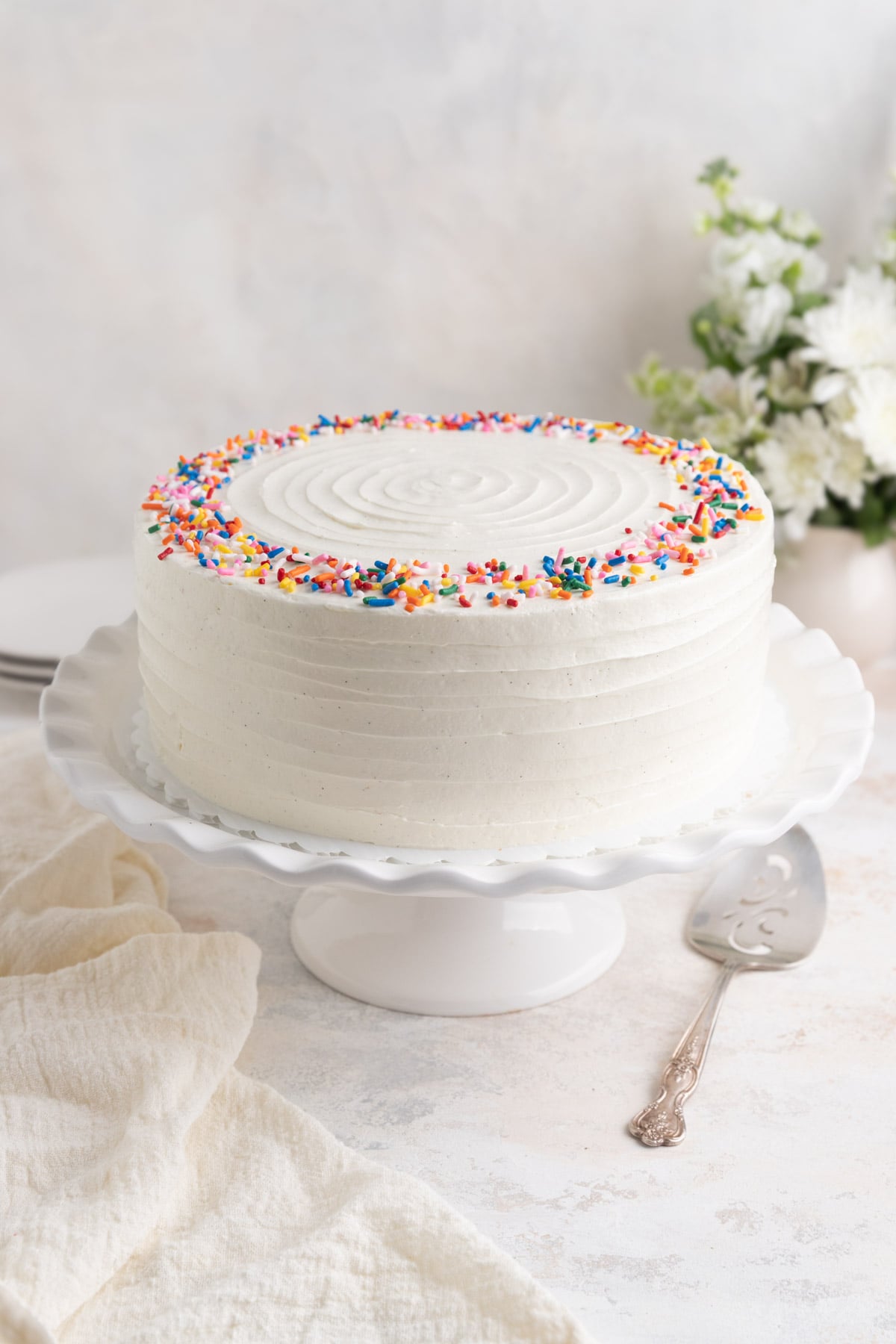
I've been wanting to add a vanilla layer cake to the blog for a long time and here it is. After 12 rounds of testing and reading various cookbooks (yes I studied), including my favorite cake book, The Cake Bible, I came up with this vanilla cake recipe. I hope it will become part of your baking rotation.
I like Swiss meringue buttercream with this cake, but if you want a simpler frosting you can use vanilla buttercream frosting.
Lean Ratio vs. High Ratio Cakes
A lean ratio cake is a cake with equal amounts of flour and sugar by weight. A high ratio cake has more sugar than flour, also by weight, usually 10-20% more.
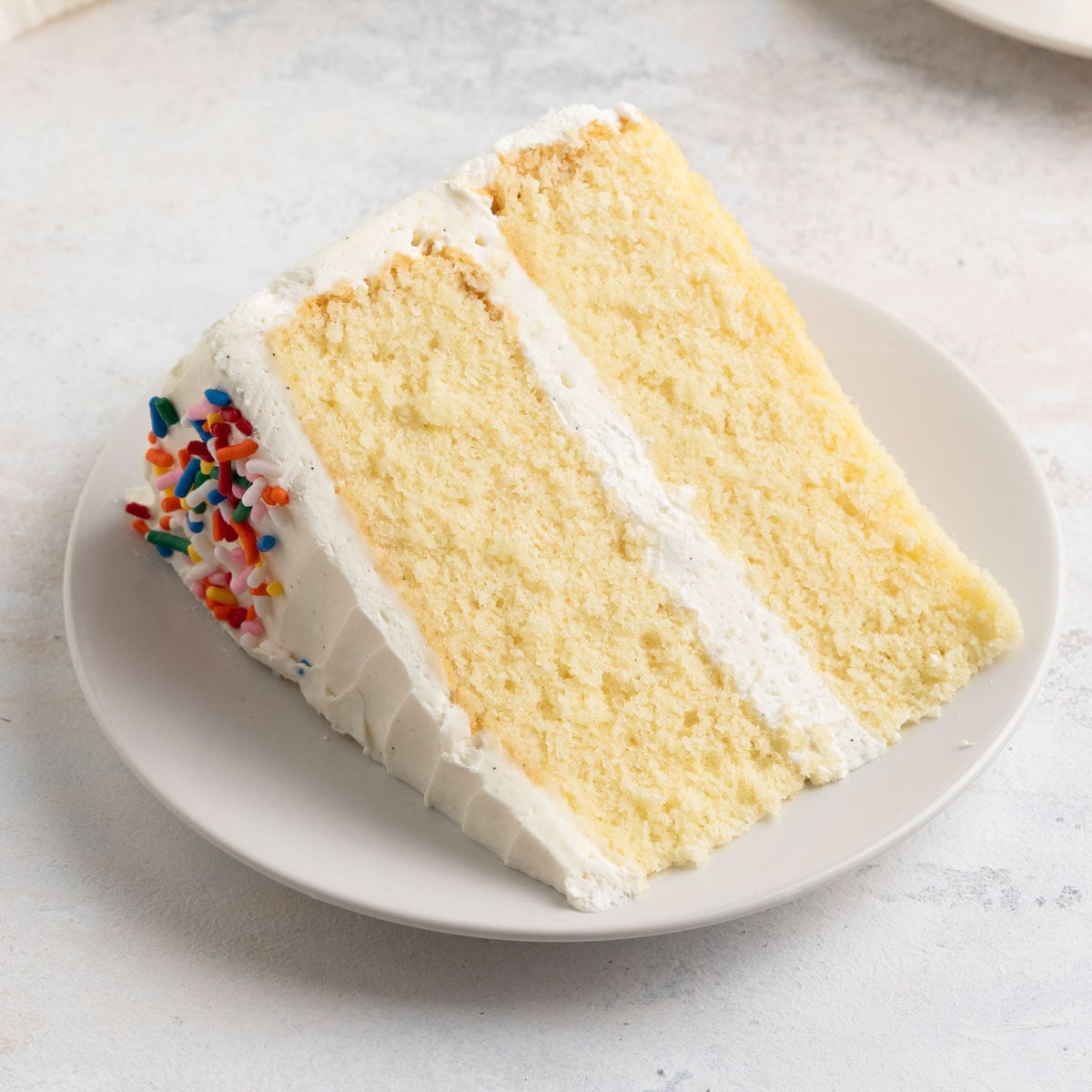
In testing this ratio I found that I preferred a high ratio cake because of the sweetness and moisture. The high ratio cake stayed moist longer than the lean ratio version. The lean ratio cakes tended to have a tighter crumb and rise a little higher than a high ratio cake. They also cut more cleanly.
READ THIS!
Cheryl's Recipe Development Notes
- High-ratio formula is the key to lasting moisture. I tested both high-ratio (sugar exceeds flour by weight) and lean-ratio (equal sugar and flour) versions of this cake. While the lean-ratio versions tasted slightly less sweet and performed well on baking day, I preferred the sweetness and moisture of the high-ratio formula (400 grams sugar to 342 grams flour).
- Cake flour and buttermilk work together to build a fine, tight crumb. Cake flour produces a fine, uniform crumb and a slightly taller layer (then if you use all-purpose flour). But my personal discovery was how much buttermilk contributed beyond flavor. Buttermilk adds a slight tang to the cake and the reaction with the baking powder contributed to the finer (tighter crumb).
- The reverse creaming method is non-negotiable for this recipe. Adding butter directly to the dry ingredients before any liquid coats the flour proteins in fat, which limits gluten development from the start. The result is a cake with a velvety, melt-in-your mouth texture, and a tighter more uniform crumb. This method also works best with cakes with a lot liquid
Vanilla Layer Cake Ingredients
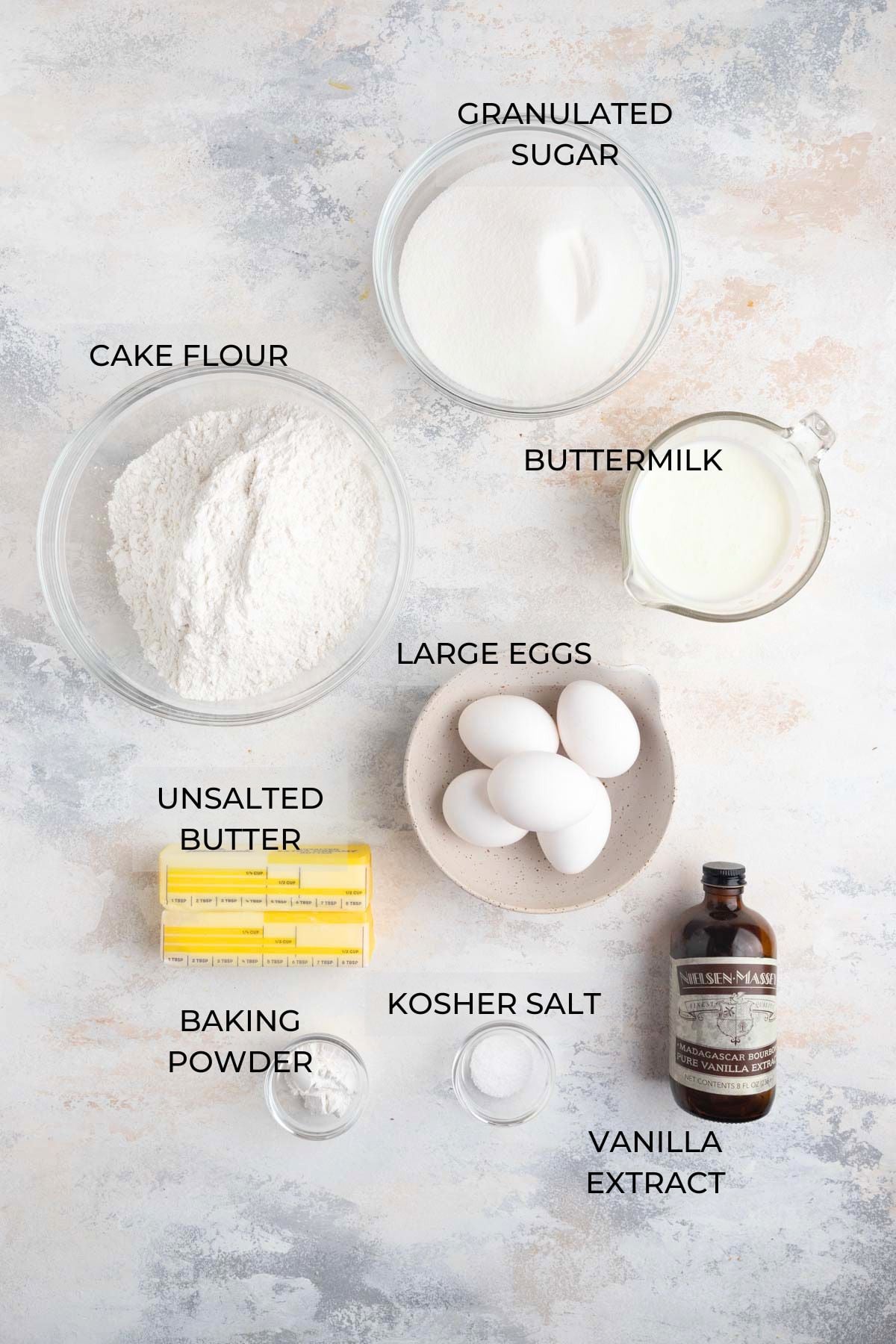
- Cake Flour: Cake flour has a lower protein content than all-purpose flour, which results in taller layers and a tighter soft crumb. For the best results I recommend using it as called for in this recipe, but you can use an equal amount of all-purpose flour by weight. All-purpose flour will result in a denser, coarser crumb and shorter layers, but the cake will still be moist.
Full ingredients, measurements, and instructions are in the recipe card at the bottom of this post.
How to Make Homemade Vanilla Cake from Scratch
Step 1: Whisk together the eggs, vanilla, and a quarter of the buttermilkl
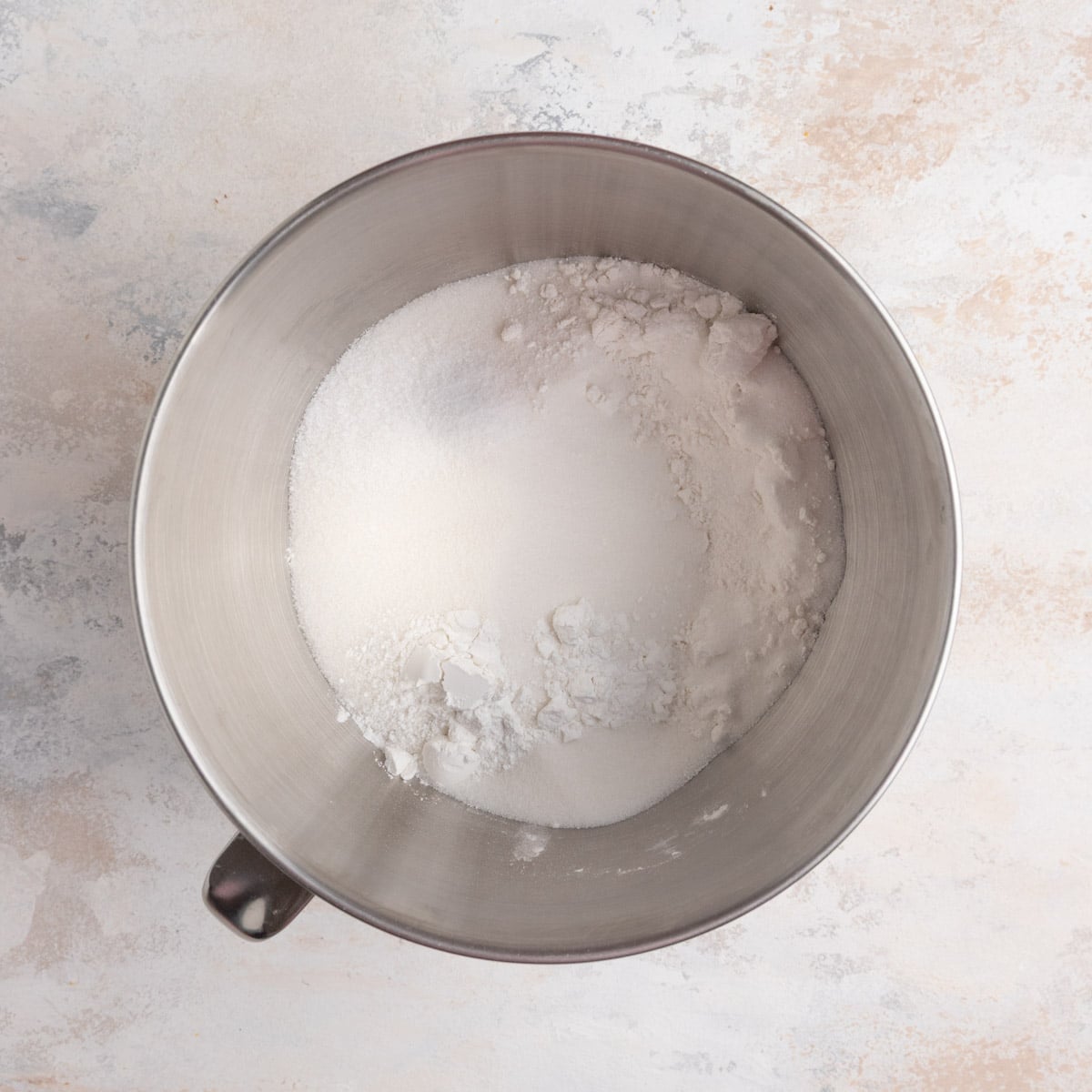
Step 2: Place the flour, sugar, baking powder, and salt in the bowl of a stand mixer and mix on low speed.
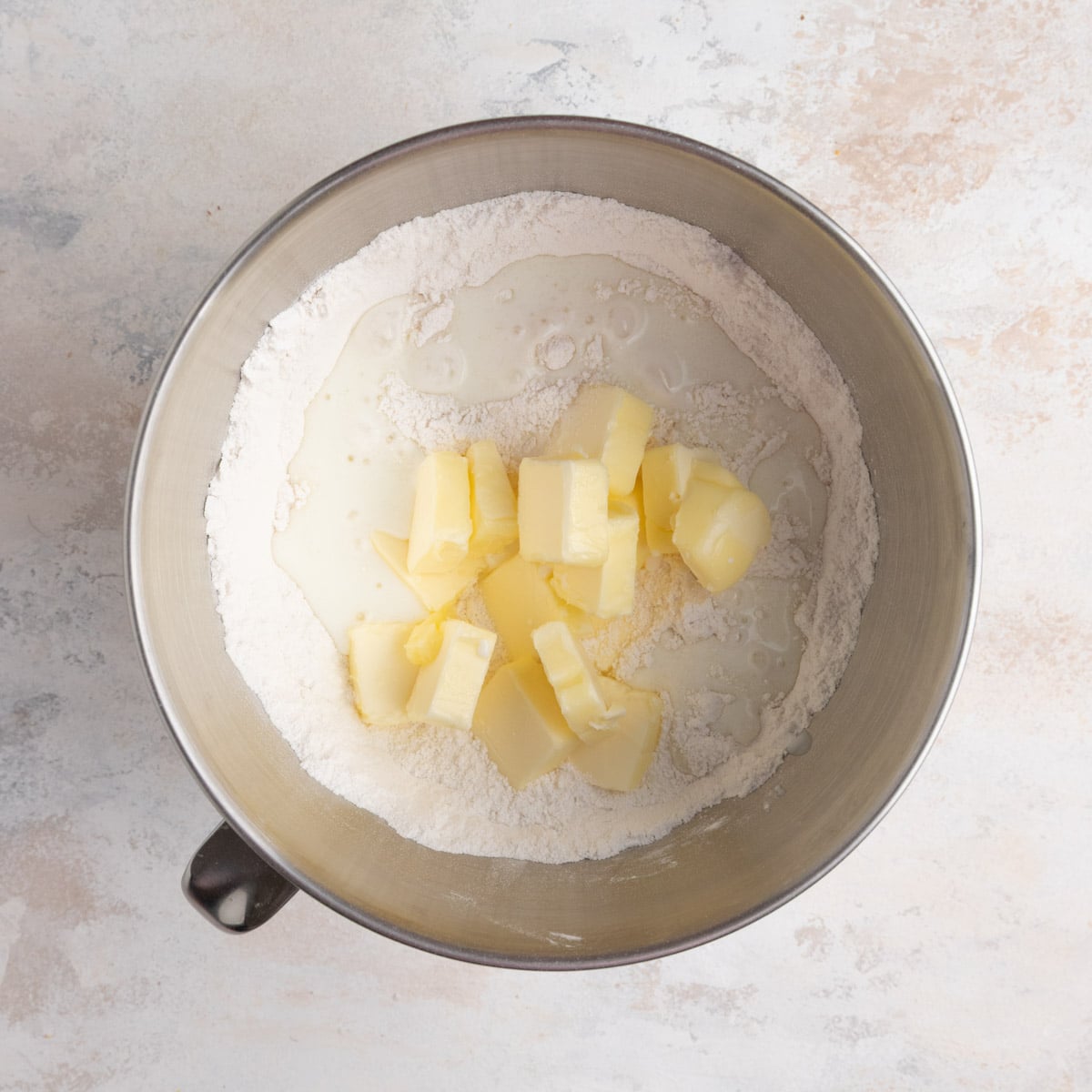
Step 3: Add the butter and remaining buttermilk
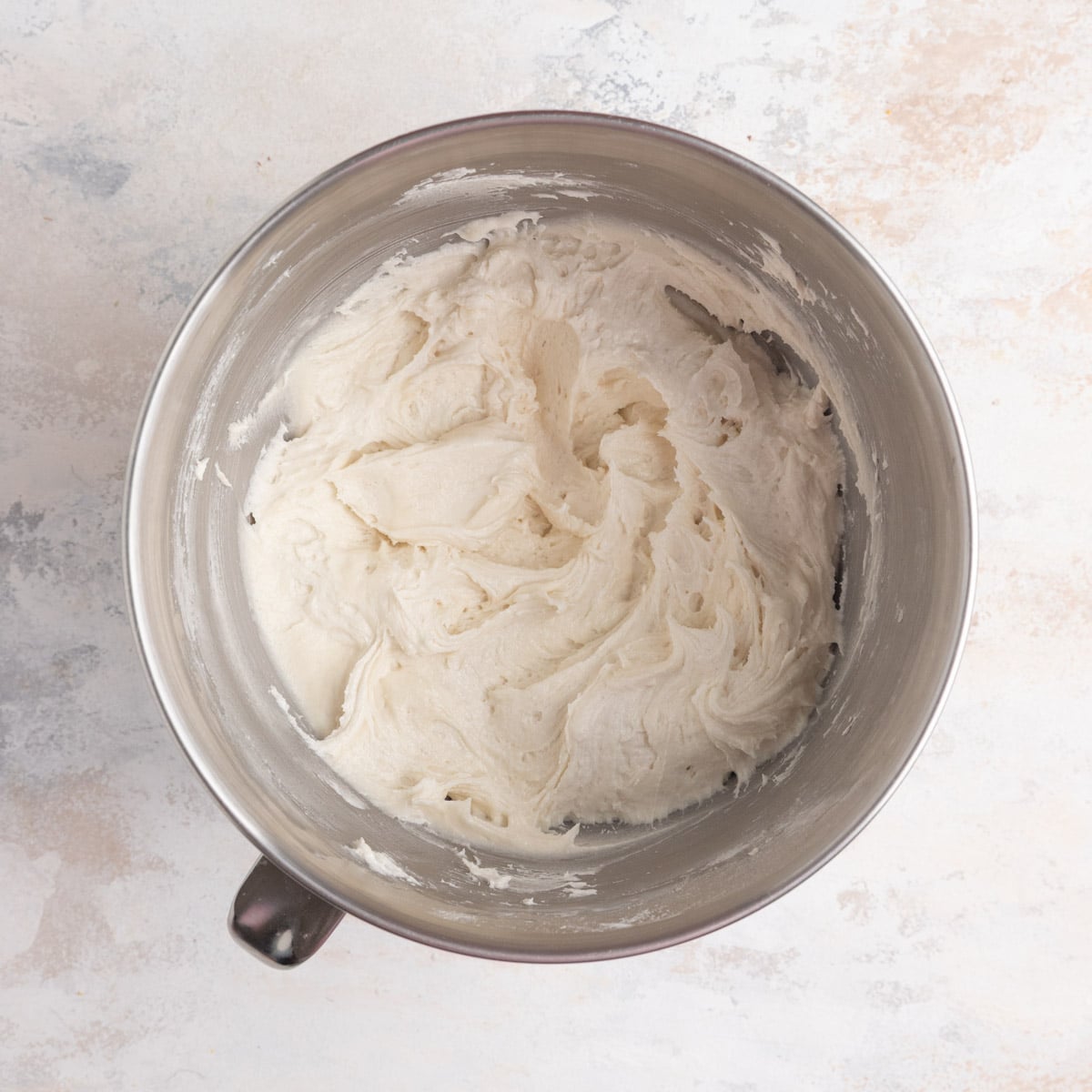
Step 4: Beat on medium speed until the mixture is well combined and creamy looking.
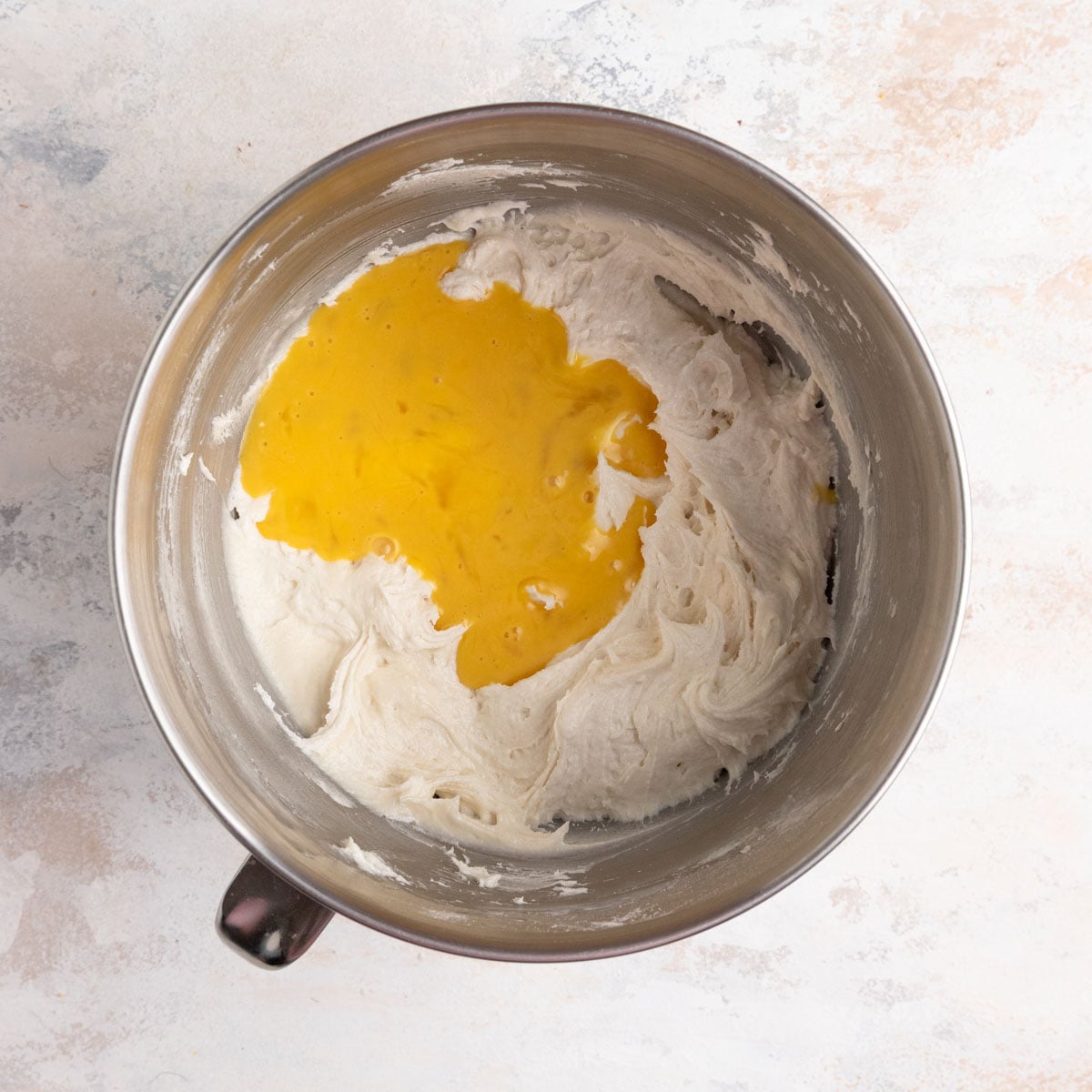
Step 5: Add the egg mixture in three batches, mixing after each addition. It's important to scrape the bottom of the mixing bowl part way through the process.
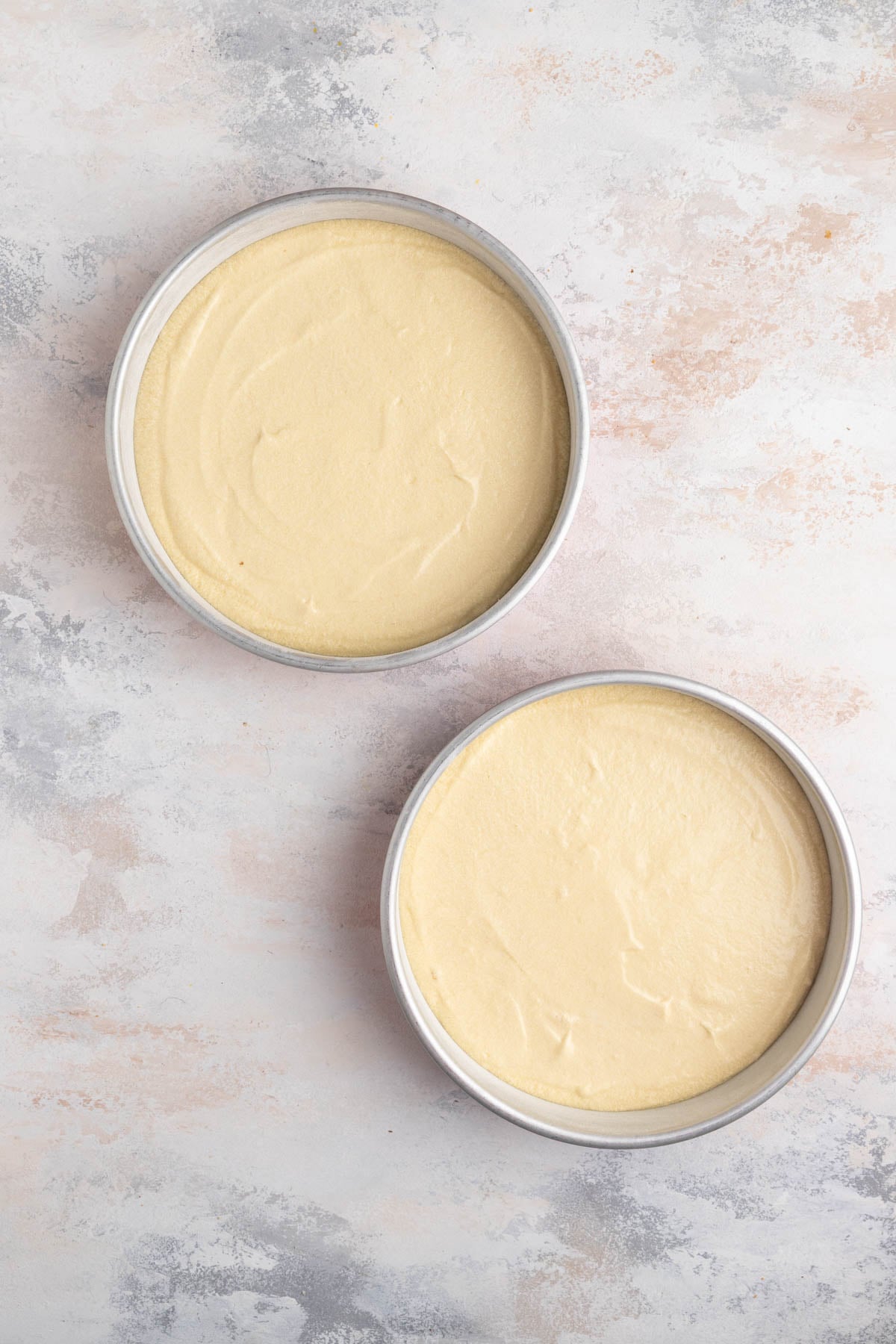
Step 6: Divide the batter between 2 9-inch cake pans. Smooth the top with an offset spatula.
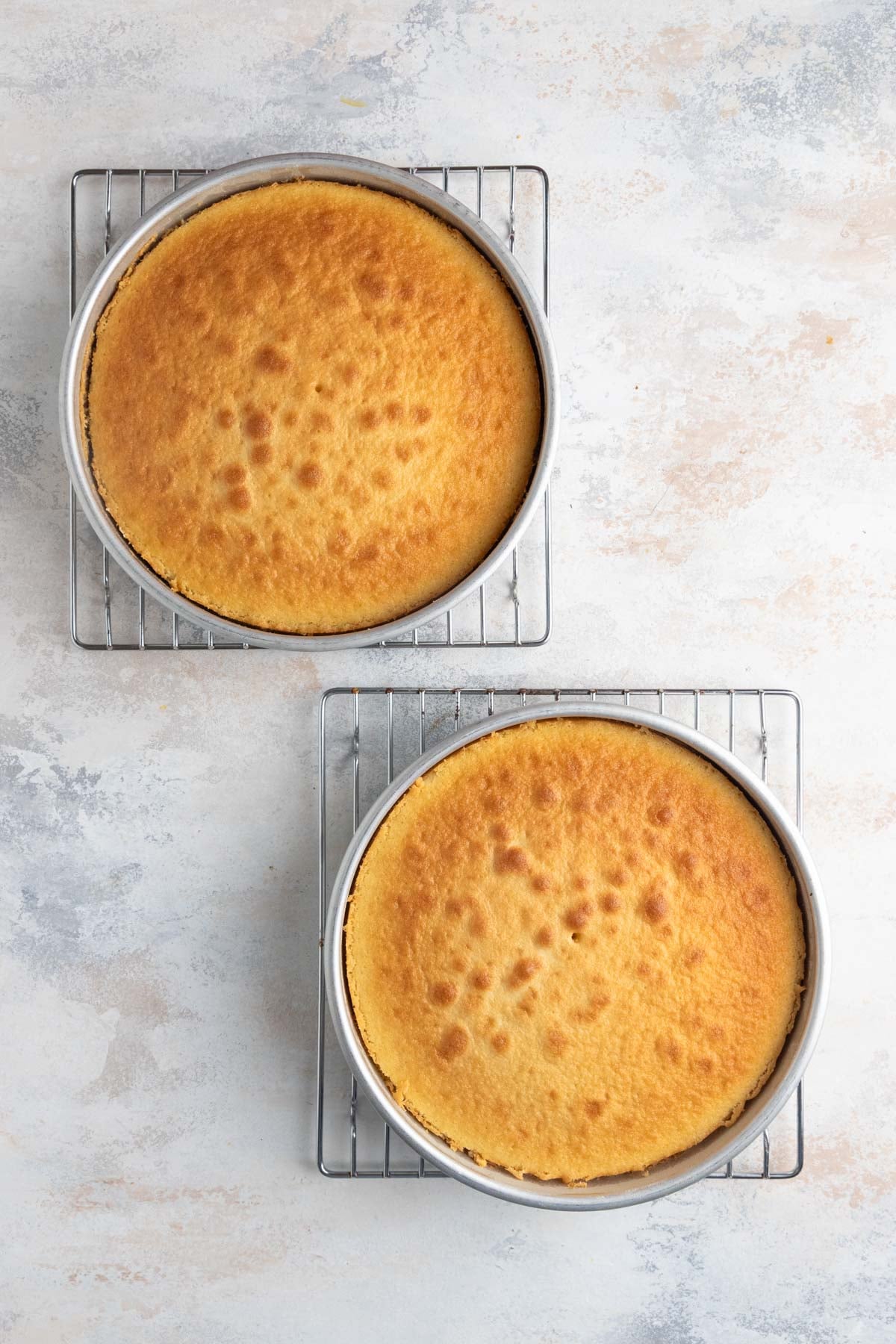
Step 7: Bake the cake until dark golden brown and the center temperature is 202°F. The cake will immediately start to pull away from the sides when they are removed the oven.
Step 8: Cool the cake for 10 minutes, and then invert on wire racks to finish cooling. Let the cakes cool completely before filling and frosting the layers.
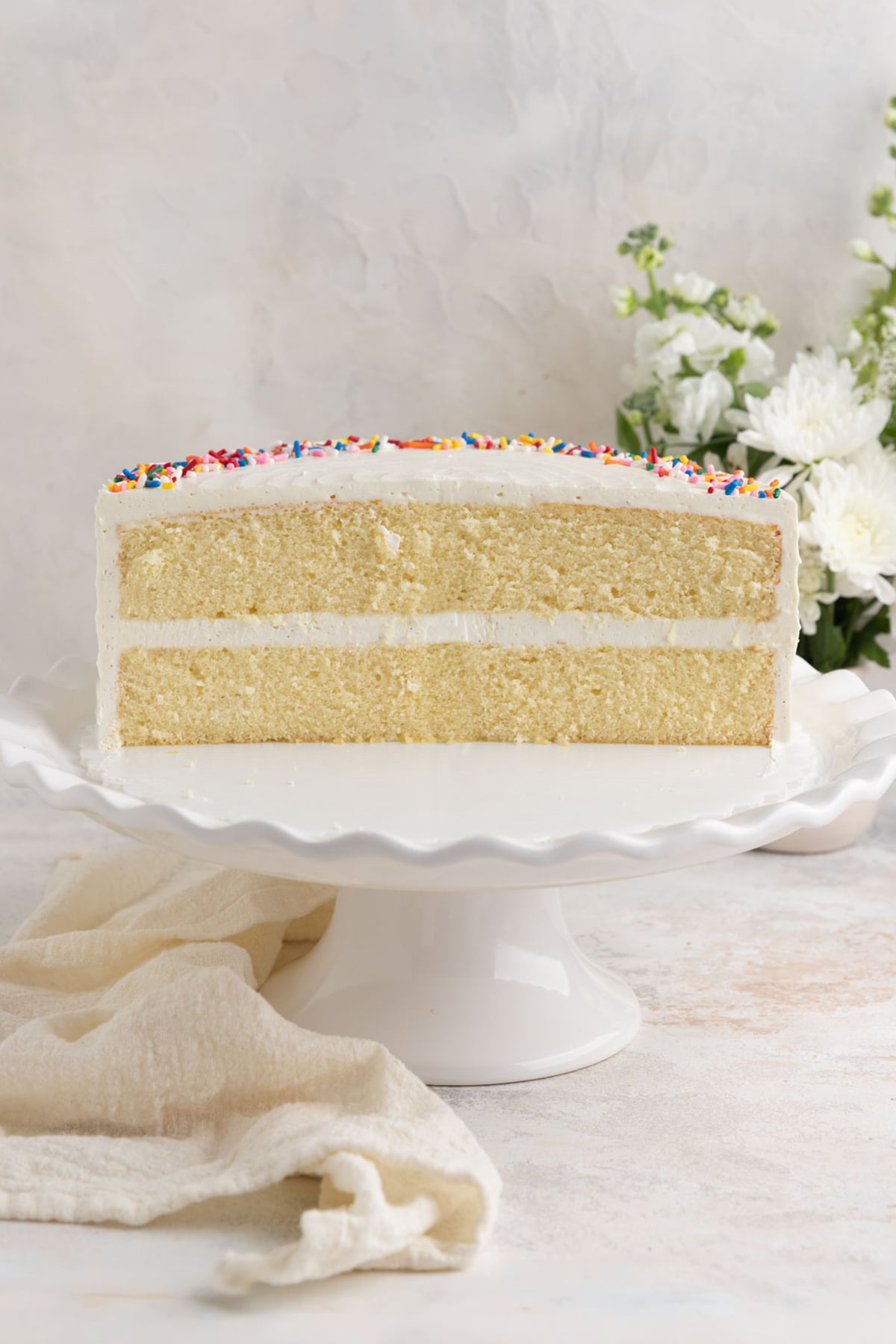
Troubleshooting This Cake If It Didn't Turn Out Right
- Cake sinks in the center after baking: Unberbaking is the most likely cause, the center wasn't set when it was removed from the oven. Expired or too much baking powder can also cause it to sink or if your oven is running cool.
- Cake didn't rise: Old (expired) or not enough baking powder is the most likely cause. Undermixing during the initial 90-second mix stage can also limit rise.
- Dry or tough cake: The cake was most likely overbaked. Use an instant-read thermometer and pull the layers at about 202°F for the most reliable indicator.
- Compact, rubbery texture: Using cold eggs, straight from the refrigerator can cause a compact rubbery texture. Cold butter can also cause a compact texture.
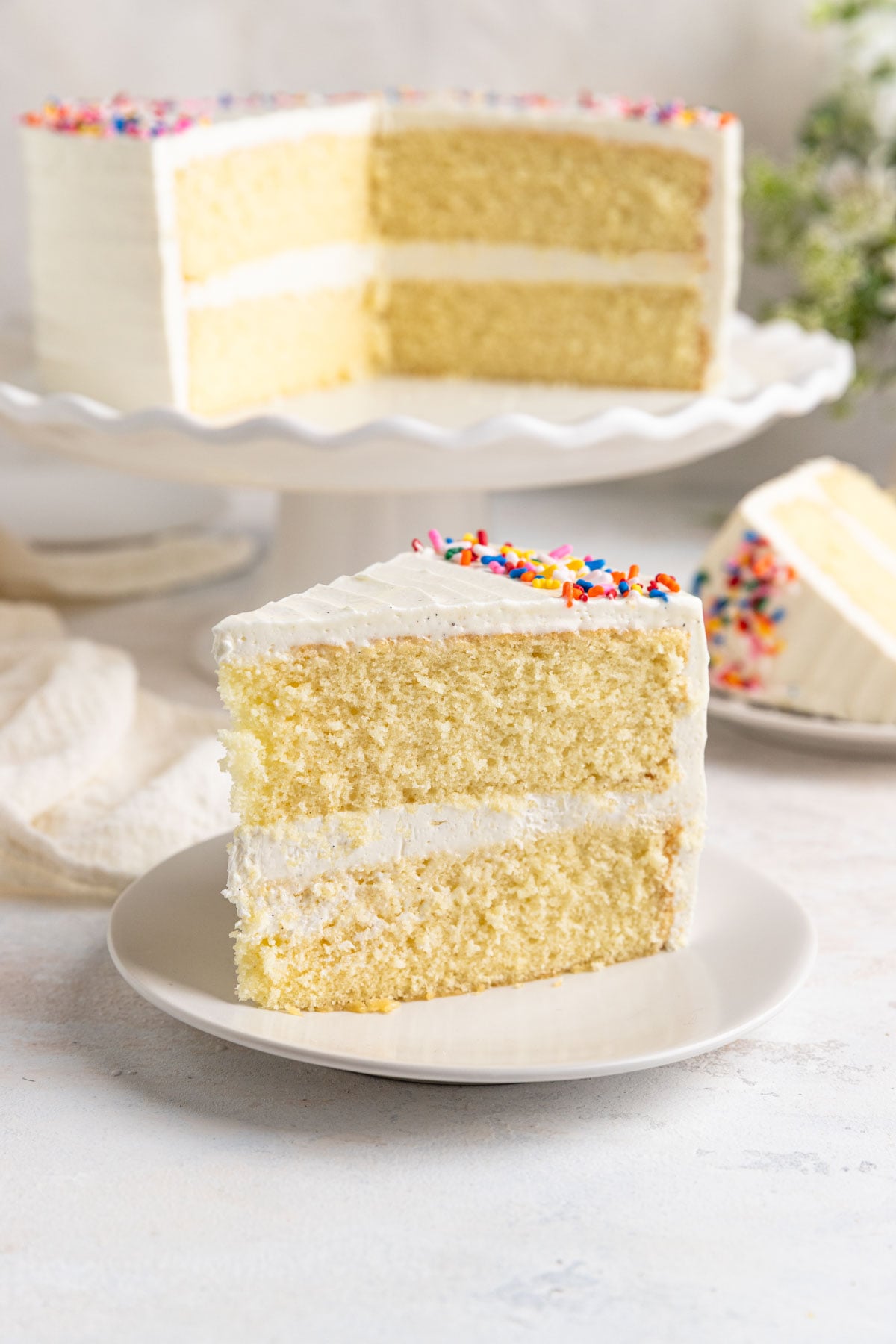
If you make this incredible vanilla layer cake please leave a rating and a comment below.
Connect with me on Instagram and tag me @bakesbybrownsugar to share your recipe remake photos.
Like what you see? Click here to subscribe to Bake's by Brown Sugar Baking Newsletter to get free and delicious treats delivered to your inbox.
Want to Save This Recipe?
Enter your email below and I'll send it to your inbox. Plus get new and recommended recipes sent to you every week!
By submitting this form, you consent to receive emails from Bakes by Brown Sugar.
Vanilla Layer Cake (Stays Moist for Days)
Equipment
- 2 9x2-inch round cake pans
- Parchment Paper (Rounds)
Ingredients
Vanilla Layer Cake
- 5 large (250 grams) eggs room temperature
- 1 cup (240 ml) buttermilk room temperature (divided:1 /4 cup for egg mixture, 3/4cup for batter)
- 2 teaspoons pure vanilla extract
- 3 cups (342 grams) cake flour sifted
- 2 cups (400 grams) granulated sugar
- 3 teaspoons (12 grams) baking powder
- 1 teaspoon Diamond Crystal kosher salt
- 1 cup (227 grams) unsalted butter room temperature (65–68°F)
Instructions
Mise en Place
- Before you begin, set out the butter, eggs, and buttermilk to come to room temperature. This takes about 30–45 minutes. Room temperature ingredients are critical for the reverse creaming method — cold butter will not properly coat the flour, and cold eggs or buttermilk can cause the batter to curdle.
Prep the Cake Pans
- Preheat the oven to 350°F.
- Generously butter the interior of two 9x2-inch round cake pans, making sure to coat the sides all the way to the top edge. Add 1–2 tablespoons of flour to each pan and tilt and rotate the pan to evenly coat all buttered surfaces. Tap out any excess flour over the sink.
- Cut two rounds of parchment paper to fit the bottom of each pan and press them in. Spray the parchment paper with baking spray. The combination of buttered and floured sides plus sprayed parchment ensures clean release after baking.
Make the Cake
- Prepare the egg mixture: Crack 5 eggs into a large bowl or liquid measuring cup. Add ¼ cup (60 ml) of the buttermilk and the vanilla extract. Whisk together until well combined. Set aside.
- Place the sifted flour, sugar, baking powder, and salt in the bowl of a stand mixer fitted with the paddle attachment. Mix on low speed for 30 seconds to combine.
- Add the butter and the remaining 3/4 cup (180 ml) of buttermilk to the dry ingredients. Mix on low speed until the dry ingredients are moistened. Increase the speed to medium and mix for 90 seconds. The batter will become smooth, thick, and creamy.
- Scrape the sides and bottom of the bowl thoroughly with a silicone spatula, and scrape the paddle attachment as well.
- With the mixer on medium speed, add the egg mixture in three equal batches, mixing for about 20 seconds after each addition until completely incorporated. After the second batch, stop to scrape the sides and bottom of the bowl. After the final addition, scrape the bottom of the bowl once more, then mix on medium speed for a final 20 seconds.
Bake the Cake
- Weigh the batter and divide it evenly between the two prepared pans, about 710 grams per pan. Smooth the tops with an offset spatula.
- Bake at 350°F for 30–35 minutes. The layers are done when they are golden brown on top and a toothpick inserted in the center comes out clean or with just a few moist crumbs. For precision, use an instant-read thermometer — the internal temperature should read 202°F.
- Remove the pans from the oven and place on a wire rack. Cool in the pans for 10 minutes.
- Lightly spray the wire rack with nonstick cooking spray. Invert each cake layer onto the rack and allow to cool completely before frosting, at least 1–2 hours.
Frost the Cake
- While the cake is cooling make the Swiss meringue buttercream frosting.
- Place one cake layer on a cake board or plate. Add 1-1/2 cups of frosting for the center and evenly spread across the layer. Place the second cake layer on top. Crumb coat the cake by spreading a thin layer of frosting over the entire layer of the cake to lock in the crumbs. This technique will prevent cake crumbs from getting mixed into the final frosting. Frost the cake with the remaining frosting.
Storing the Cake
- Unfrosted layers: If making the cake layers a day ahead, wrap each cooled layer tightly in two layers of plastic wrap and store at room temperature. The high-ratio formula keeps the layers moist for up to 2 days.
- Frosted cake: Once frosted, the cake can sit at room temperature in a cake container for up to 2 days if Swiss meringue buttercream or American buttercream is used. For best flavor and texture, consume within 2–3 days of frosting.
Nadia Alazri says
This cake was delicious!