
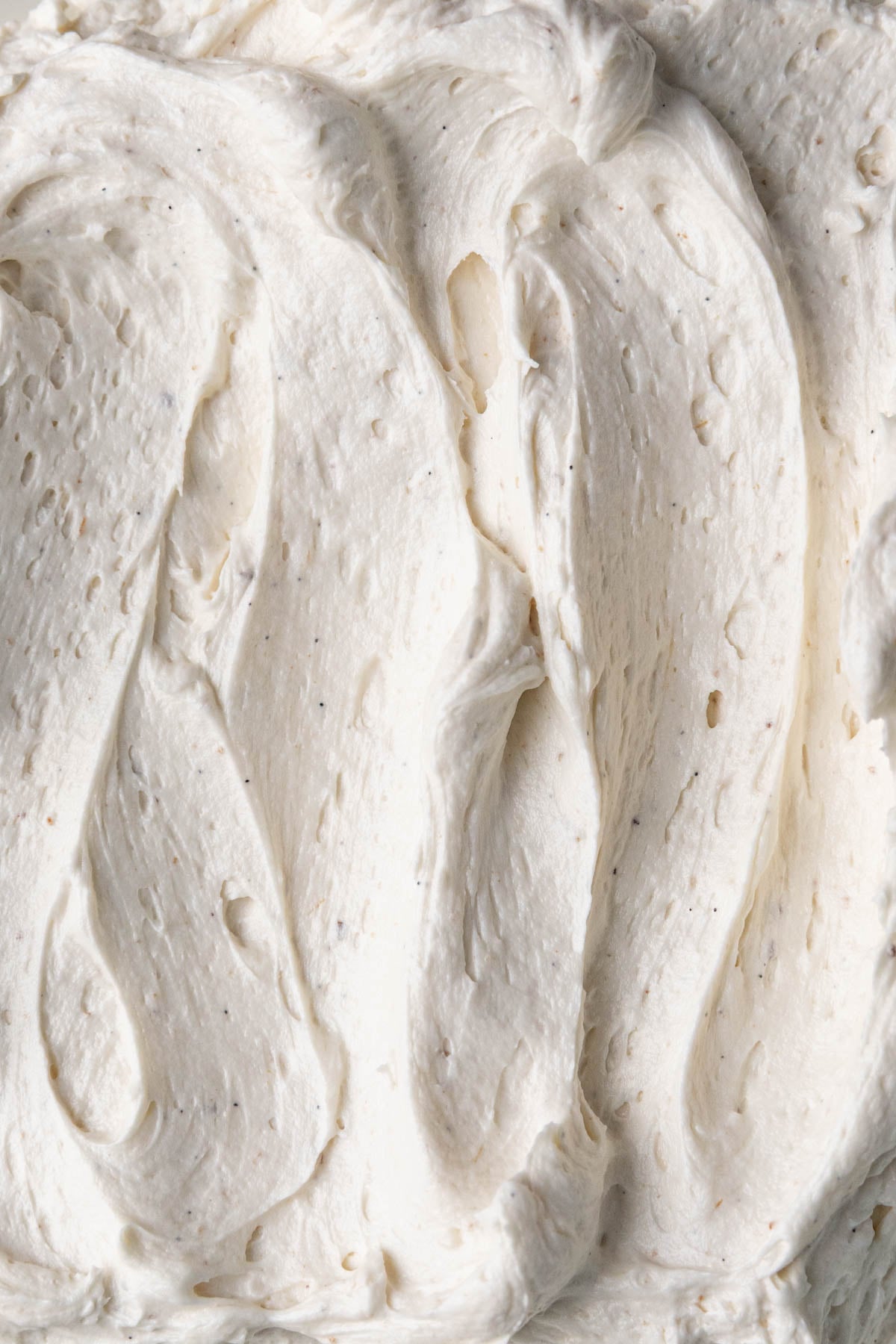
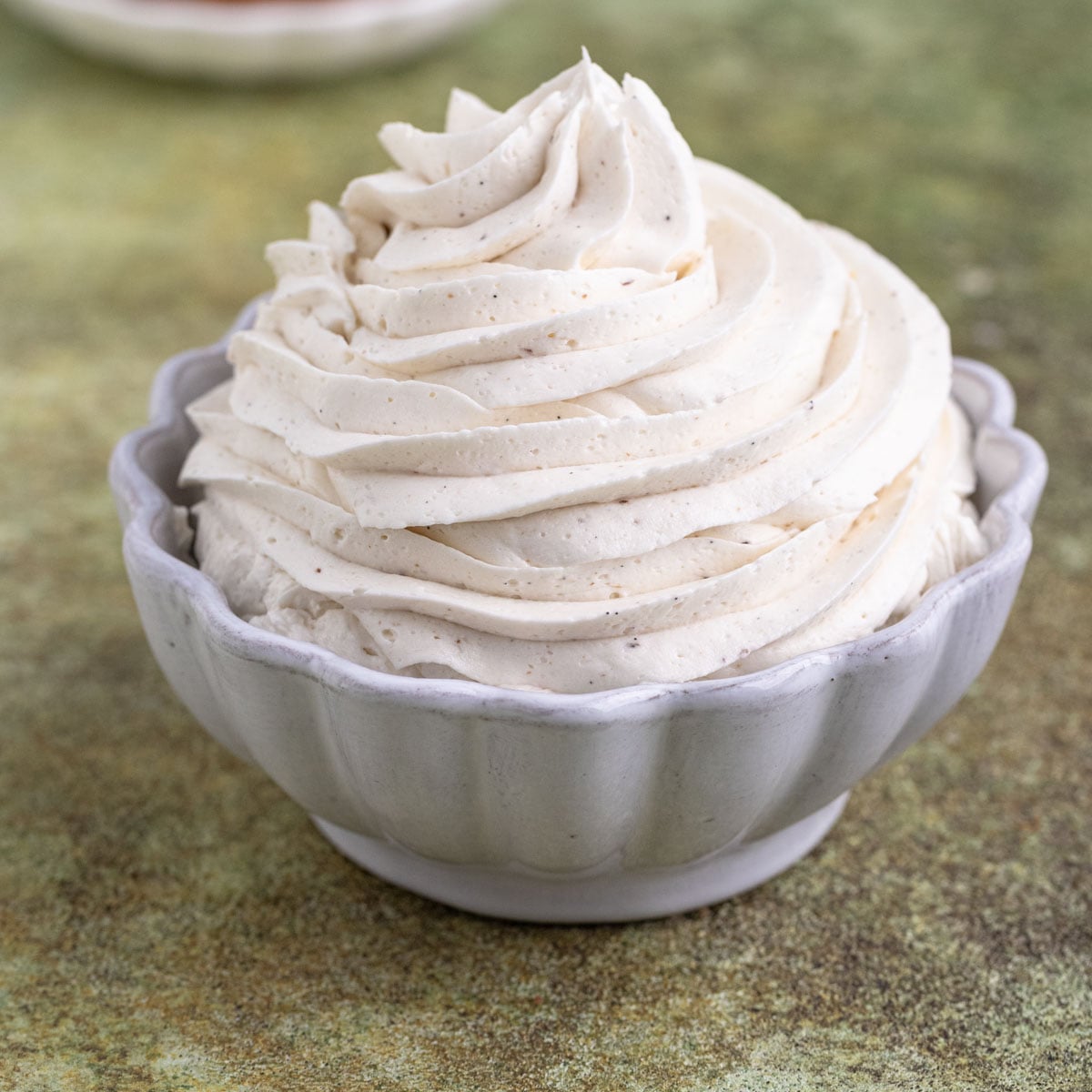
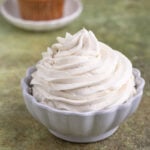
This vanilla ermine frosting is silky, not too sweet and has the texture of whipped cream. A cooked flour roux made of sugar, milk, flour, and cornstarch is whipped with butter and vanilla bean paste for a buttercream that is light and creamy with a strong vanilla flavor.
What You Need to Know About This Frosting
Ermine frosting, aka boiled milk frosting is a vintage frosting recipe from the early 1900's. It's actually the original frosting for red velvet cake. I discovered it in an America's Test Kitchen and was intrigued by the idea of making a frosting with a cooked flour mixture.
Not only do I love the silky creamy texture, but it's a frosting that is easy to make, easy to pipe, holds it's shape and is very versatile. It work's well with vanilla layer cake recipe.
You will need time to make this frosting - it will take about 2 hours for the flour roux to cool, before it is mixed with the butter, but I do have a quick cooling tip if you're in a hurry. This is one of my favorite frostings, I can literally eat it by the spoonful. It's creamy and tastes like a thick whipped cream.
READ THIS!
Cheryl's Baker Notes
- This frosting is versatile. One of the things I love about this frosting is how versatile it is. You can create other flavors simply by replacing all or a portion of the milk with fruit puree or other liquid. For my strawberry ermine buttercream I replace part of the milk with pureed strawberries and for my coconut ermine, the milk is replaced with coconut milk.
- Unlike American buttercream, ermine uses a cooked flour-milk pudding base rather than powdered sugar, which gives it a lighter, less sweet, more stable structure. The starch network in the base is what holds everything together once it's whipped with butter.
- Quick cooling tip. I usually make the flour roux first and while it cools, I make the cupcakes or cake. But if you're in a hurry, place the warm cooked mixture in a mixer bowl and with the whisk attachment whisk on low speed for 10-15 minutes until it's 80°F or below.
Vanilla Ermine Frosting Ingredients
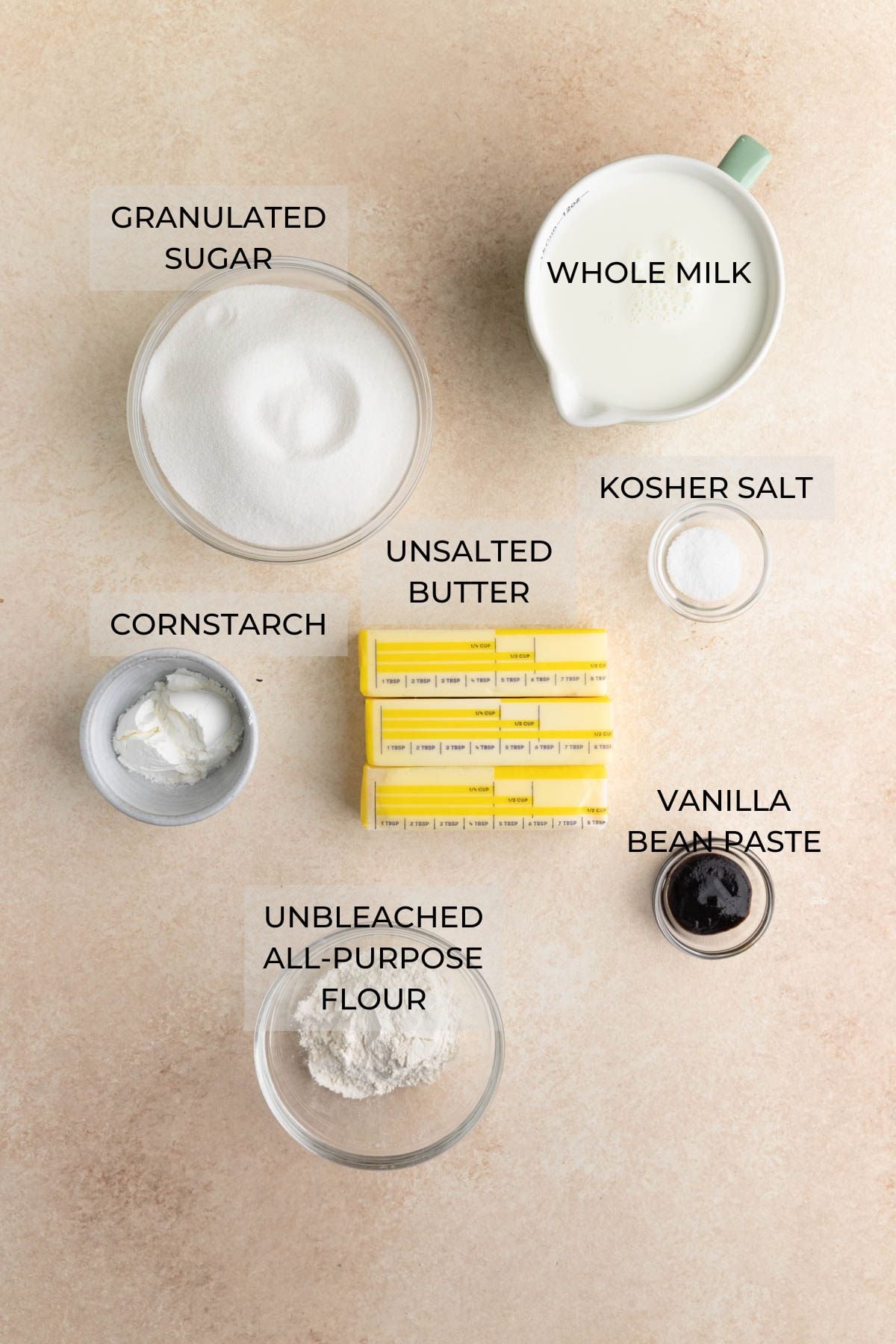
Full ingredients, measurements, and instructions are in the recipe card at the bottom of this post.
How to Make Silky Smooth Ermine Frosting
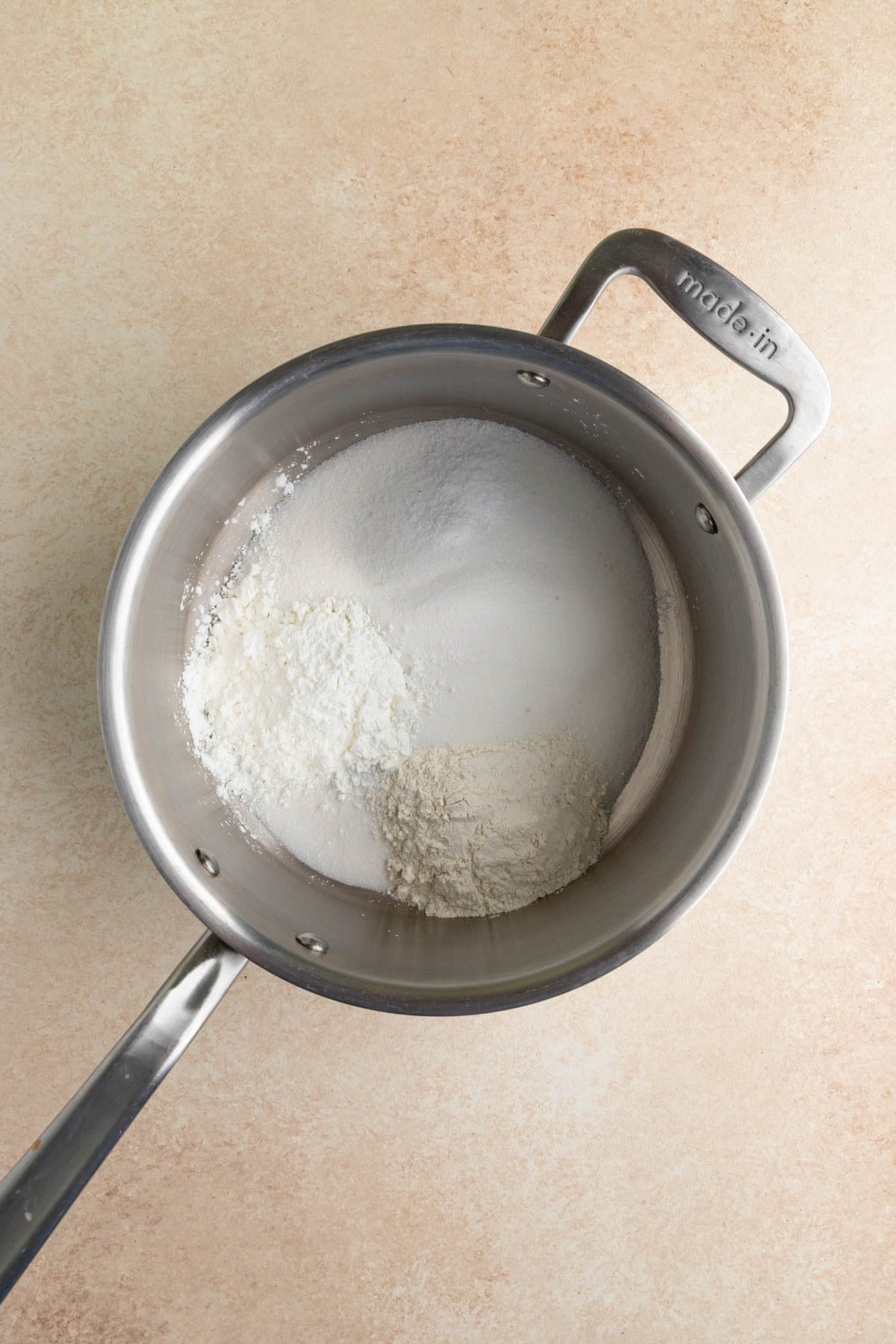
Step 1: In a saucepan whisk together the sugar, flour, cornstarch, and sugar.
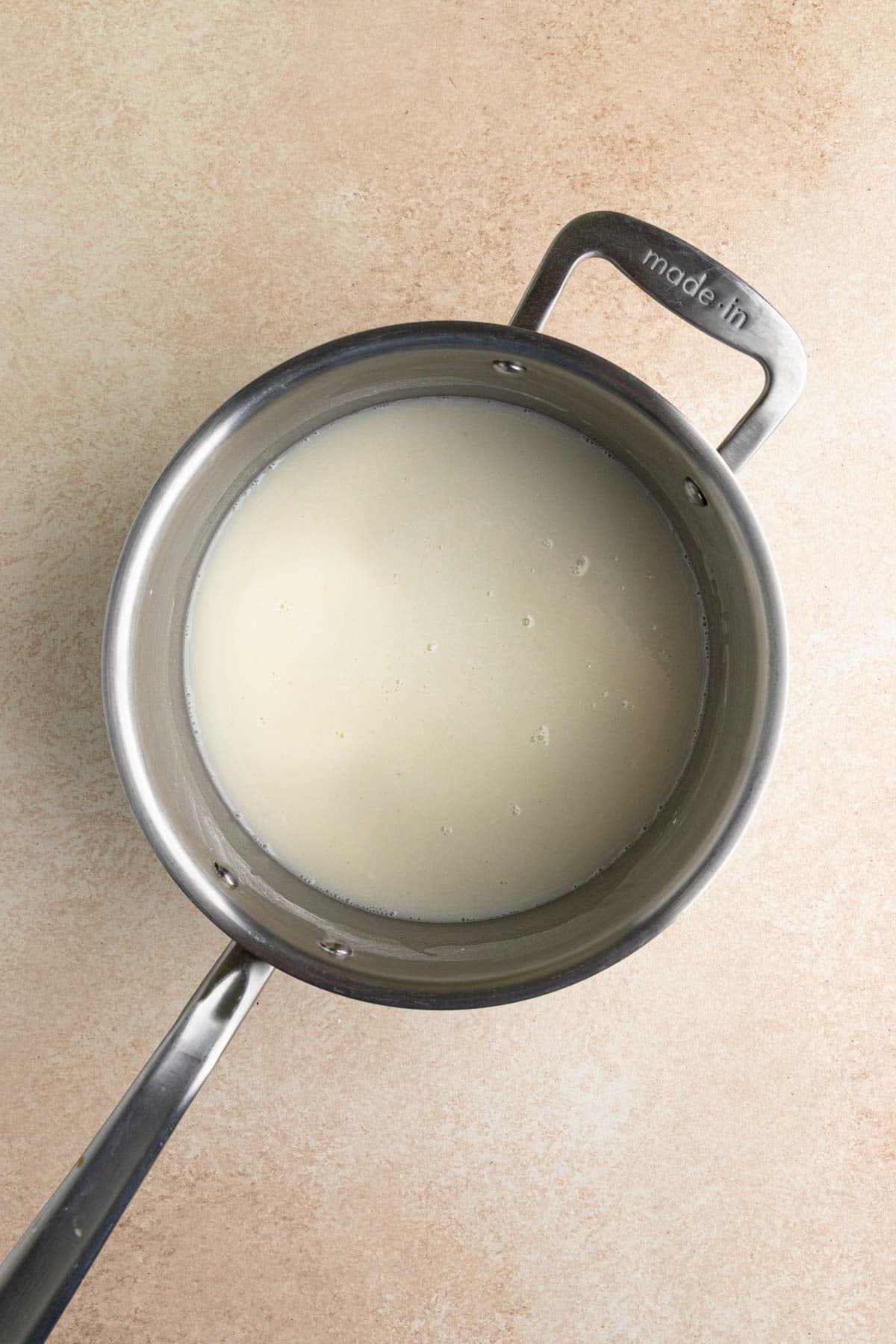
Step 2: Slowly whisk in the milk, until the mixture is smooth.
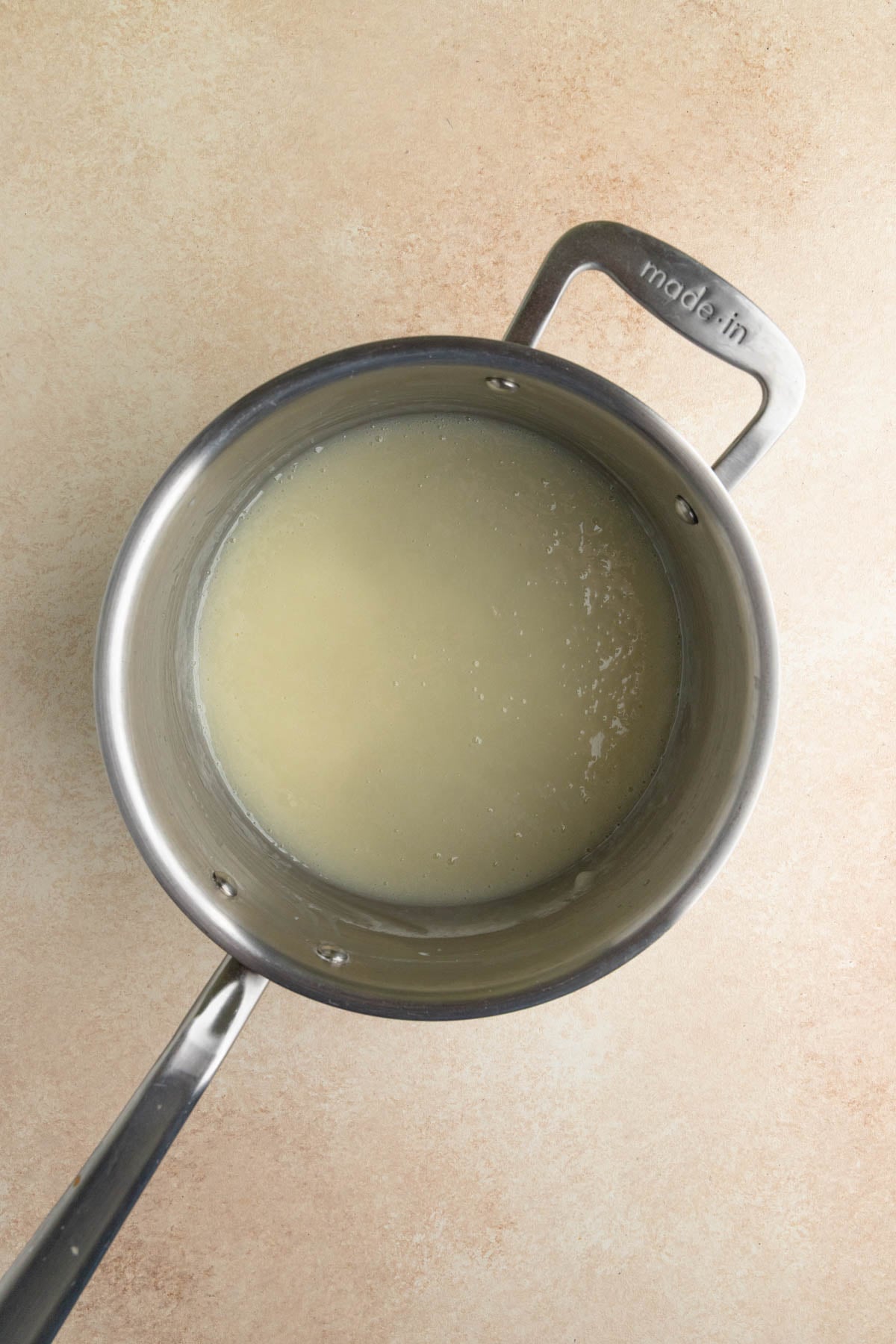
Step 3: Cook the roux until is is thick, shiny, and just begin to boil.
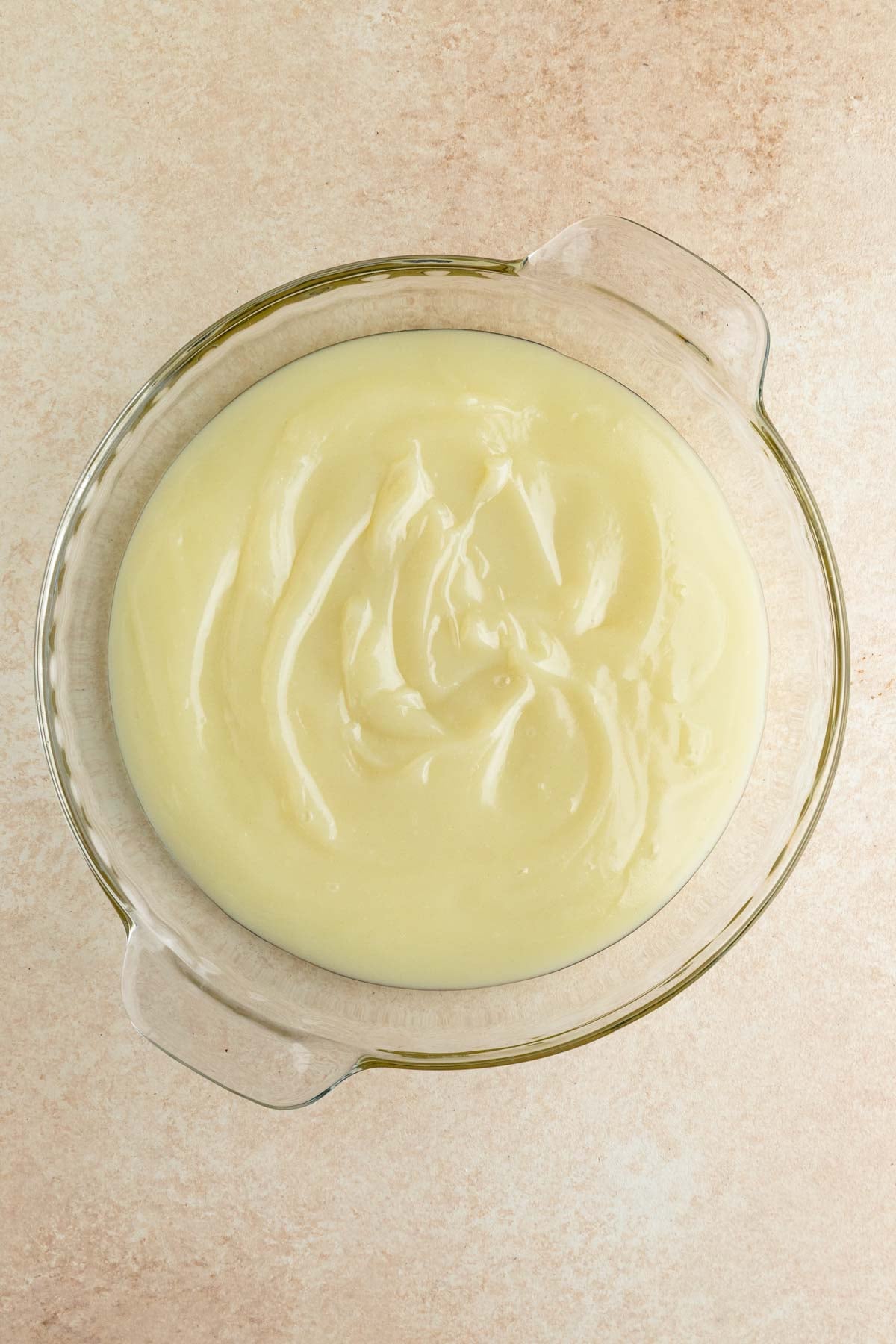
Step 4: Pour the flour roux into a heat proof bowl or pie plate. I like the pie plate because it cools quicker.
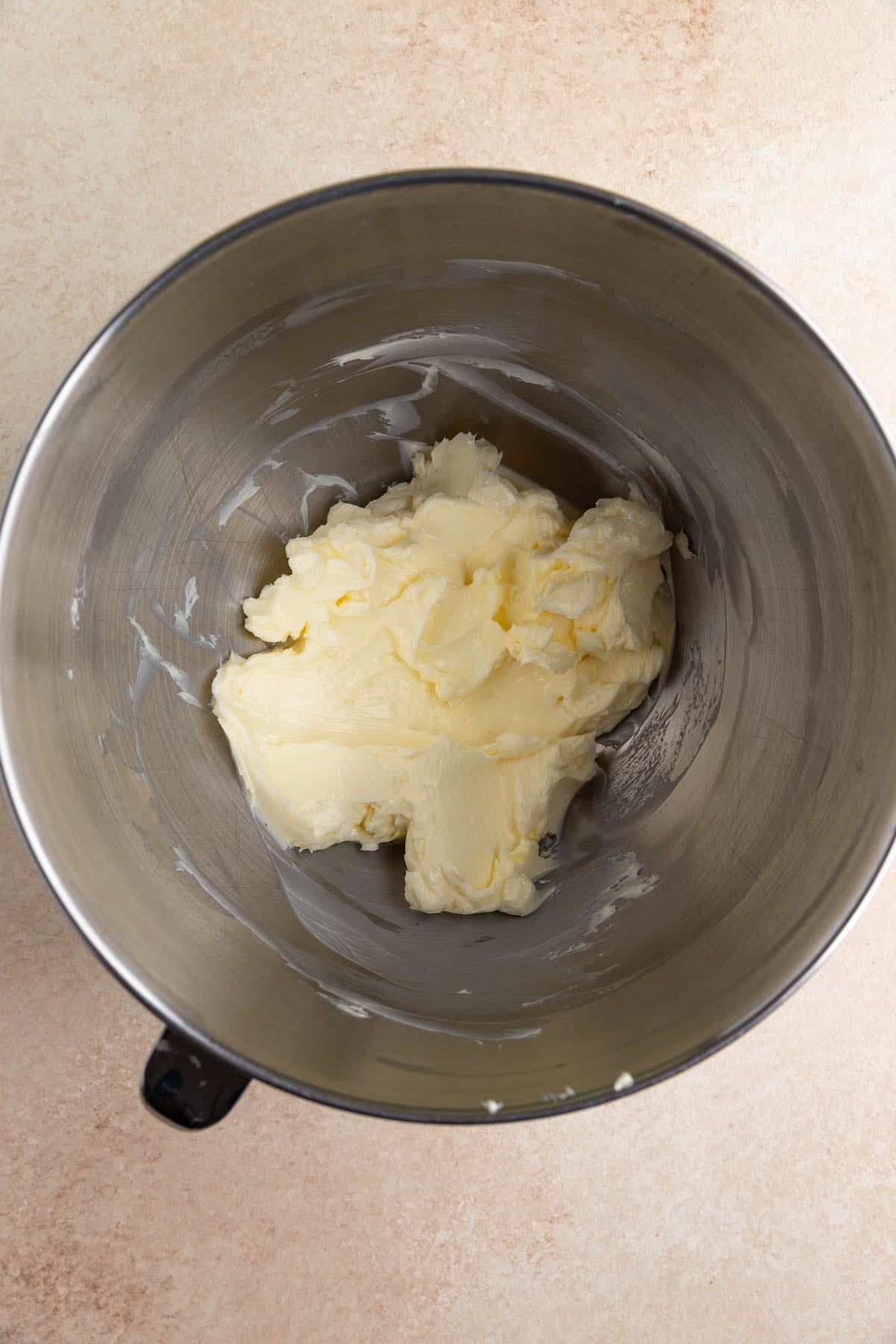
Step 5: Beat the butter in the bowl of of a stand mixer.
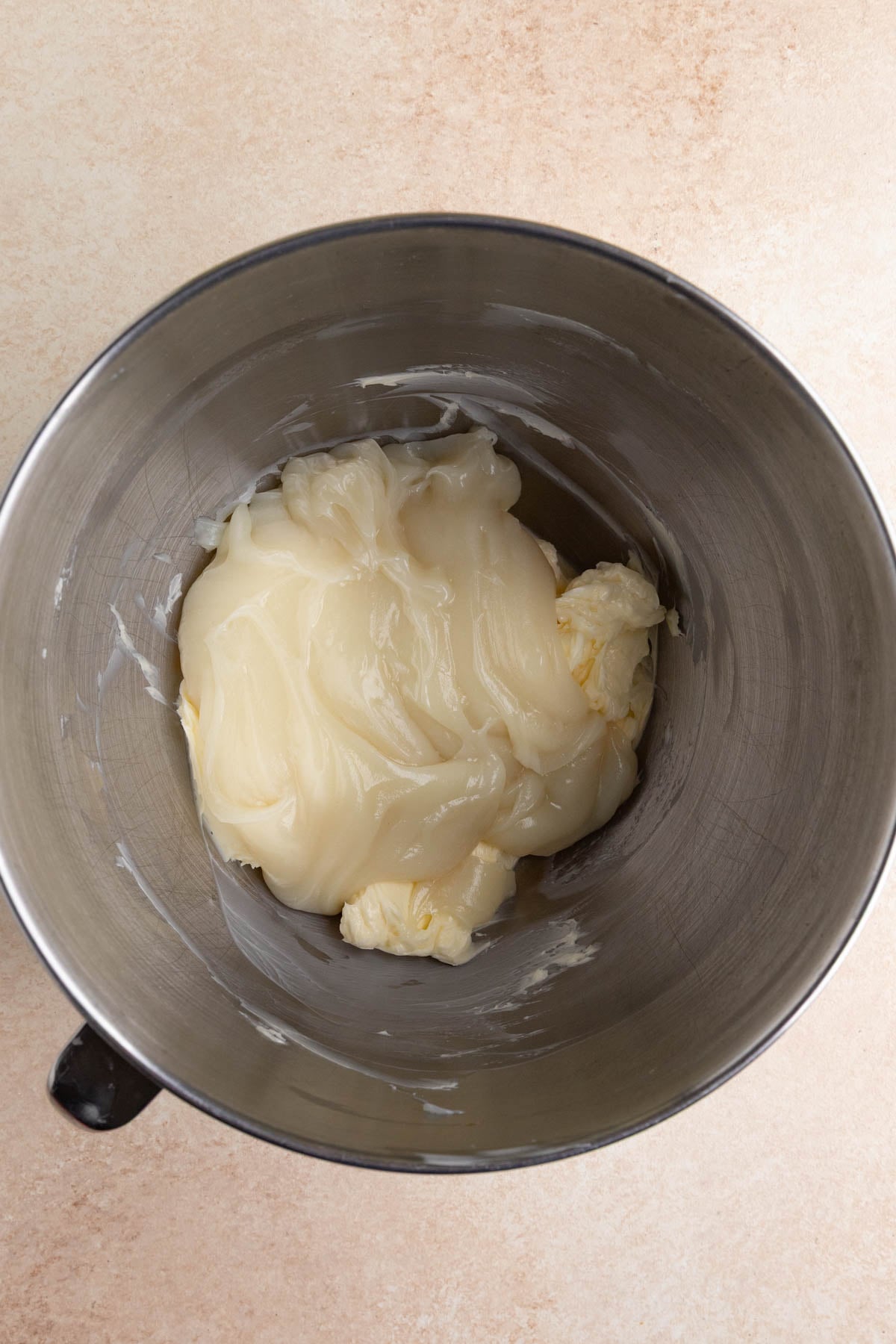
Step 6: Add the cooled roux. It should be cool to the touch, but at room temperature. Don't use a cold roux.
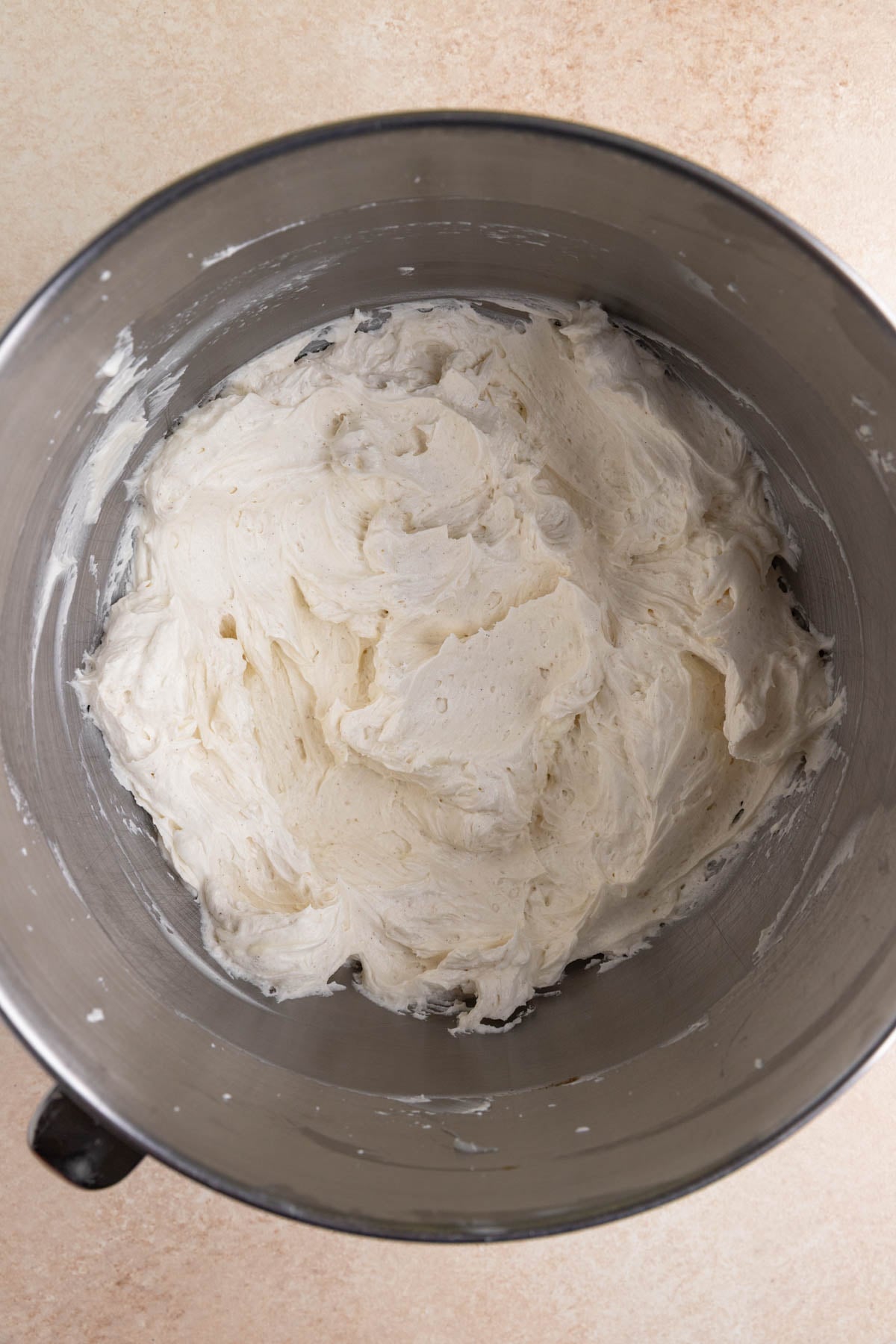
Step 7: Whip the roux and the butter until the frosting is silky and has a creamy texture.
Troubleshooting Your Ermine Frosting
If there are issues with your ermine frosting most problems are caused two things: the temperature of the flour roux when it's combined with the butter, or the temperature of the butter itself.
- The frosting is runny and won't hold a shape. The roux wasn't thick enough before it came off the heat, or it was still warm when you added it to the butter. A properly cooked roux should be the consistency of thick pudding and hold a clean line when you drag a spatula across the bottom of the pan. If it slides back in quickly, it needs more time. Adding warm roux to butter is the most common reason ermine goes wrong — the residual heat softens the butter faster than the mixer can incorporate air, and the emulsion never sets up properly.
- The frosting looks curdled or broken. This almost always means the butter was too cold. Cold butter can't absorb the roux evenly. Instead of emulsifying, it seizes around each spoonful and the mixture looks lumpy or separated. Check my recipe card notes for how to bring it back.
- The frosting is dense and greasy. Butter on the warm side of room temperature (above 68°F) produces a softer, heavier frosting that may never fully whip. It will feel greasy on the palate rather than light. This is why the butter temperature range in the recipe card matters (65–68°F).
- There are small lumps of roux that won't incorporate. The roux developed a skin while it was cooling. Pressing plastic wrap directly onto the surface of the roux — not just over the bowl — prevents this. If you see lumps, press the roux through a fine-mesh sieve before adding it to the butter.
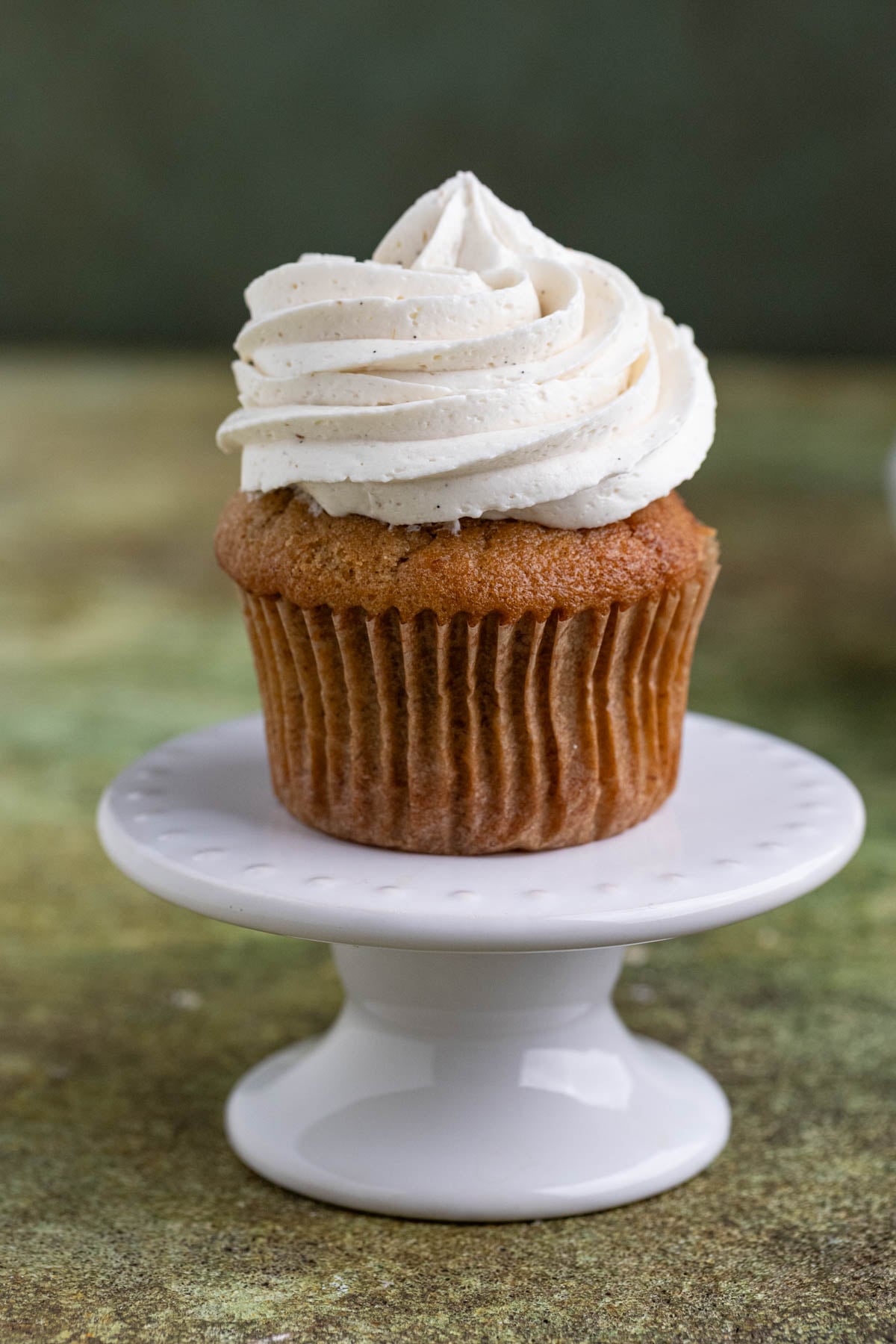
If you make this vanilla ermine frosting please leave a rating and a comment below.
Connect with me on Instagram and tag me @bakesbybrownsugar to share your recipe remake photos.
Like what you see? Click here to subscribe to Bake's by Brown Sugar Baking Newsletter to get free and delicious treats delivered to your inbox.
Want to Save This Recipe?
Enter your email below and I'll send it to your inbox. Plus get new and recommended recipes sent to you every week!
By submitting this form, you consent to receive emails from Bakes by Brown Sugar.
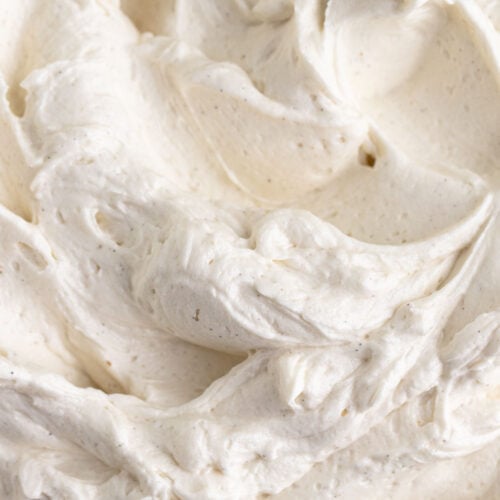
Vanilla Ermine Frosting
Ingredients
- 1 1/2 cups (300 grams) granulated sugar
- 1/4 cup (35 grams) unbleached all-purpose flour
- 3 tablespoons (24 grams) cornstarch
- 1/2 teaspoon Diamond kosher salt
- 1 1/2 cups (340 grams) whole milk
- 24 tablespoons (342 grams) unsalted butter room temperature 65-68°F
- 2 teaspoons vanilla bean paste
Instructions
- This recipe makes 5 cups, enough for a 9-inch two-layer cake or an 8-inch three-layer cake.
Make the Frosting
- In a 3 or 4-quart nonreactive pan whisk together the sugar, flour, cornstarch and salt. Slowly whisk in the milk until the mixture is smooth. There may be a few bits of visible flour.
- Start the mixture over medium-high heat, whisking constantly, until you start to see steam rise from the mixture. Reduce the heat medium and continue to cook the mixture, whisking constantly and scraping the corners of the saucepan. When it has thickened and starts to boil (you’ll see bubbles start to pop the surface). At this point reduce the heat to medium low and whisk for another minute.
- Remove the mixture from heat and pour the mixture to a wide bowl or glass pie plate and let cool completely, about 2 hours. It should be 80°F or less.
- Using a stand mixer fitted with a paddle attachment, beat the butter (which should be between 65-68°F) on medium-high speed until light and fluffy, about 5-minutes. Turn off the mixer, scrape the sides and bottom of the bowl and add the milk-flour mixture. Mix on medium speed until combined. Increase speed to medium-high and beat until the frosting is light and fluffy, 3 to 5 minutes. Add the vanilla paste and beat for 1 more minute.
Storing the Frosting
- Ermine frosting can be stored at room temperature for up to 2 days if the room is cool, 70°F or below. If your kitchen is warm it can be stored for up to a day, then it should be refrigerated.Ermine frosting can be stored in an airtight container in the refrigerator for up to 5 days. Before using, bring it to room temperature and rewhip briefly to restore its texture.
Notes
- Strawberry Ermine Frosting: Replace half of the milk with pureed strawberries.
- Coconut Ermine Frosting: Replace all of the whole milk with coconut milk.


Chris says
OMG! This is the best buttercream! Not too sweet and tastes like vanilla ice cream. Pipes nicely
Cheryl Norris says
Hi Chris
I'm so glad you enjoyed this buttercream. It's one of my favorites.😁