
I love this brioche dough recipe, and I'm so excited to share it with you. It's soft and rich (from lots of butter) and tastes amazing. My recipe uses unbleached all-purpose flour and bread flour, resulting in a soft, tender loaf with a nice chew. The recipe starts with a preferment and ends with an overnight proof in the refrigerator, which intensifies the flavor. This recipe makes enough for two brioche loaves.
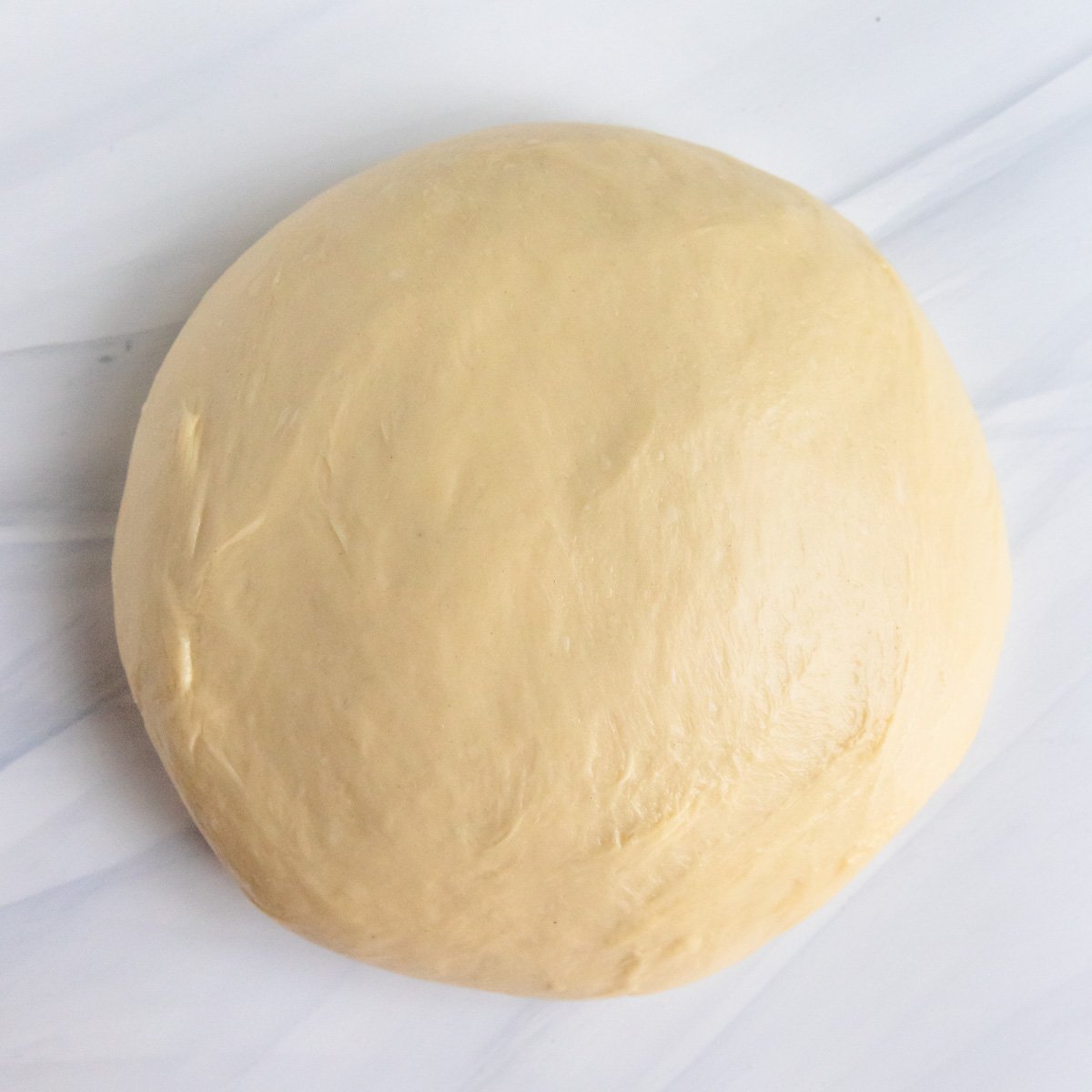
In this blog post and recipe card, I walk you through the details of making brioche dough from scratch, sharing tips from my extensive testing to help you achieve the perfect result. This dough is the start for many delicious recipes, including my Brioche Loaf and Brioche au Sucre (aka brioche buns with pearl sugar).
About This Brioche Dough Recipe
This bread recipe starts with a preferment or a dough starter. I mix a portion of the flour with the milk and yeast and allow it to ferment for about 45-60 minutes, until it's risen and bubbly.
This quick fermentation gives the yeast a head start, resulting in a more flavorful brioche with a deeper golden color. It also helps to strengthen the gluten structure, leading to a more open crumb and better rise. (While this might seem like an extra step, it allows the yeast to activate and get to work early, resulting in a richer flavor and improved rise.)
The overnight chill allows the dough to develop more flavor and breaks down the gluten, which results in a more tender loaf of bread. Chilling the dough also makes it easier to work with. The dough is very soft after the first rise, so chilling the dough is a must. If you're short on time, you can reduce the chill time to 4 hours.
Key Techniques for Perfect Brioche Dough
- Resting the Dough Before Adding Butter: One of the key tricks I learned from watching an old episode of a Julia Child cooking show is to let the dough rest for 15 minutes before incorporating the butter. This simple step makes a noticeable difference, making the butter much easier to work into the dough.
- The Importance of a Preferment: Another essential step is the preferment, which is a small mixture of flour, milk, and yeast. It helps develop a subtle yet distinctive flavor in the dough. Allowing the preferment to rise fully before mixing it into the dough enhances the depth of flavor in the final bread.
- Keep Your Butter Cool: Keeping your butter cool (around 65°F) is crucial. Cool butter incorporates more smoothly and prevents the dough from becoming too warm and sticky. This ensures the dough maintains its structure and is easier to handle during mixing and shaping.
Brioche dough is one of those things you learn to make. I tested this recipe 8 times, to understand the techniques, the things that can go wrong, the mistakes I made so I could share that information with you. If you at first you don't succeed don't be discouraged, be exciting about what you're learning.
Understanding the Brioche Dough Formula
Scaling a recipe is easier when you understand the formula behind it. Brioche dough follows a specific ratio of ingredients to maintain its texture and structure. Here’s how this recipe breaks down by weight:
| Ingredient | Weight (g) | Percentage |
|---|---|---|
| Total Flour (Bread and All-Purpose) | 406g | 100% |
| Whole Milk | 80g | 20% |
| Active Dry Yeast | 10g | 2.5% |
| Granulated Sugar | 38g | 9.4% |
| Large Eggs | 200g | 49% |
| Kosher Salt | 7g | 1.7% |
| Unsalted Butter | 200g | 49% |
How I Developed This Formula
I didn’t just want to make brioche, I wanted to understand how to make it. I spent time reading through my cookbooks and researching online articles to identify the typical ingredient ratios used in classic brioche recipes. I found that a 1:1 ratio of butter to eggs and a 2:1 ratio of flour to both eggs and butter were common in many traditional formulas.
From there, I adjusted the sugar based on my personal taste preferences. The amount of milk was fine-tuned through multiple tests, I found that this specific quantity provided the right hydration to create a smooth, workable dough without making it too sticky or lumpy. Understanding these proportions allows you to confidently scale the recipe while maintaining its perfect balance of richness, softness, and structure.
Tips for Success
- Refrigerate Before Shaping: The dough is much easier to handle after chilling, preventing stickiness and making shaping easier.
- Keep Butter Cool: Butter at 65°F incorporates best and keeps the dough cool, preventing it from becoming too sticky.
- Be Patient with Mixing: It takes time for the butter to fully incorporate. Scrape down the bowl as needed.
- Check the Yeast Expiration Date: One of the first things to do is check the expiration date on the package of yeast. If it's past the due date, go get a fresh package.
Brioche Dough Ingredients
I love the combination of bread flour and all-purpose flour. The bread flour gives the brioche a nice chew, while the all-purpose flour provides a nice soft crumb. The combination of the two provides the best of both worlds.
If you don't have bread flour, you can make this brioche with all-purpose flour.
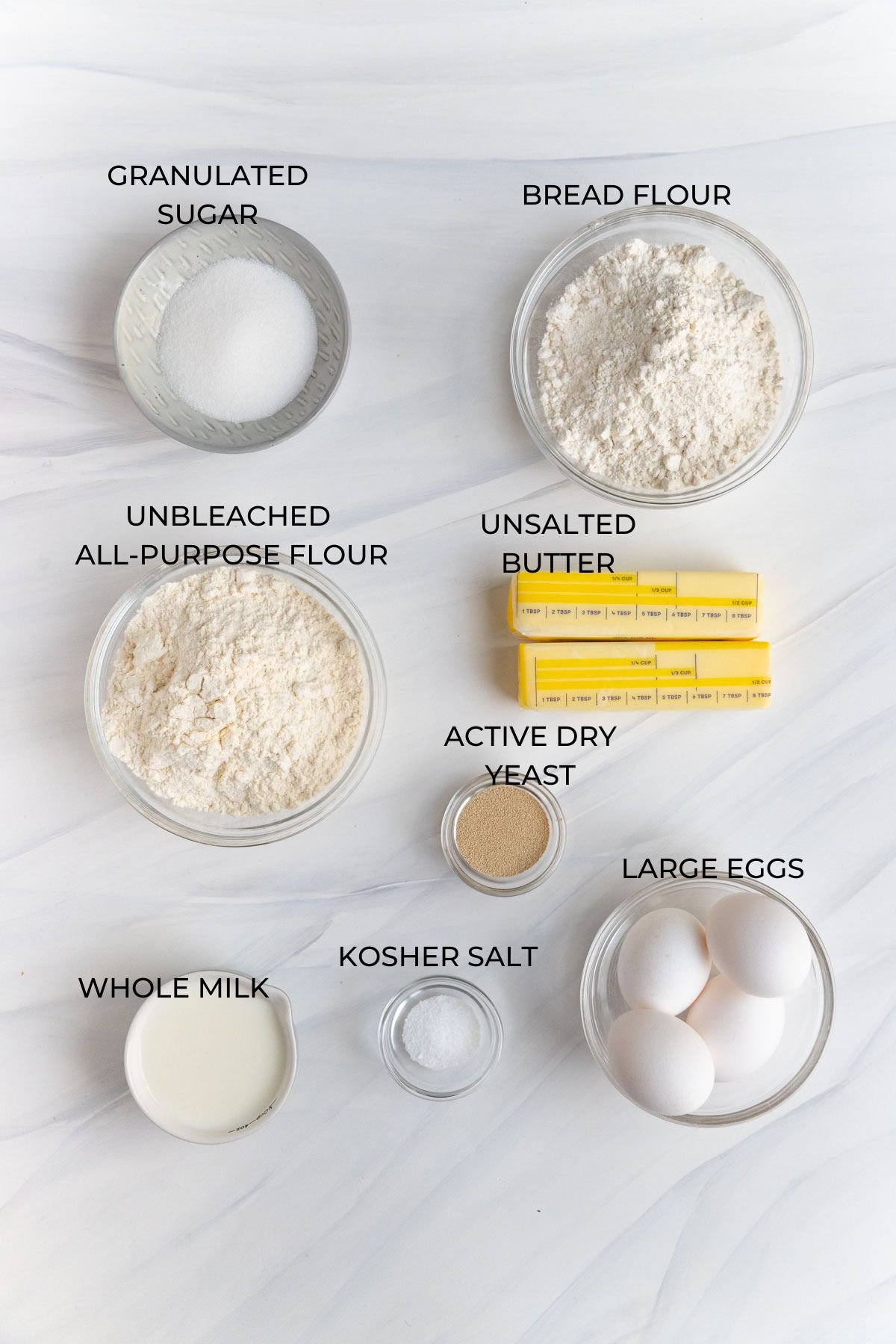
- Bread Flour & All-Purpose Flour: I use a 50/50 mix of bread flour and AP flour. Bread flour adds strength and chewiness, while AP flour keeps the crumb soft. You can use all AP flour, but the texture will be slightly different.
- Active Dry Yeast: Provides the rise and fermentation needed to develop structure and flavor. For this recipe, I prefer using active dry yeast instead of instant yeast for the fermentation process.
- Whole Milk: Hydrates the dough and helps create a tender crumb. Since flour is hygroscopic and can dry out or absorb moisture from the air in a humid climate, you may need to add 1 or 2 tablespoons of additional milk when you're mixing the dough so it forms a smooth ball.
- Eggs: Add richness, flavor, and structure. Since the recipe ingredients are based on the weight of ingredients, weigh your eggs to ensure you're adding enough. Don't go by just the number of eggs, especially if you're using something other than conventionally raised grade A large eggs.
- Unsalted Butter: The key ingredient that makes brioche so rich tasting. It adds richness and softens the texture. I tested this bread with both American-style sweet cream butter and European cultured butter. Both types work for this recipe, but the dough was softer and a little harder to handle with the European butter. I started testing this recipe with American-style butter, so the amount of flour is based on the fat content in that butter, which makes it easier to handle when all the mixing is done. My preferred butter is Tillamook butter, which is 81 percent butter fat. Just 1 percent below the Kerrygold I tested it with, but that 1 percent made a big difference in handling the dough.
- Granulated Sugar: If it's an enriched dough, it has sugar. One of the benefits of brioche is that you can use it as a dessert because of the amount of sugar. The amount of sugar sweetens the dough and helps it to brown during baking.
- Kosher Salt: Enhances flavor and balances sweetness. Even though salt is a small percentage of the overall recipe, your brioche will taste flat without it
Full ingredients, measurements, and instructions are in the recipe card at the bottom of this post.
What to Make After the Dough is Finished
Once you've made this amazing brioche dough, here are two of my recipes that use this dough.
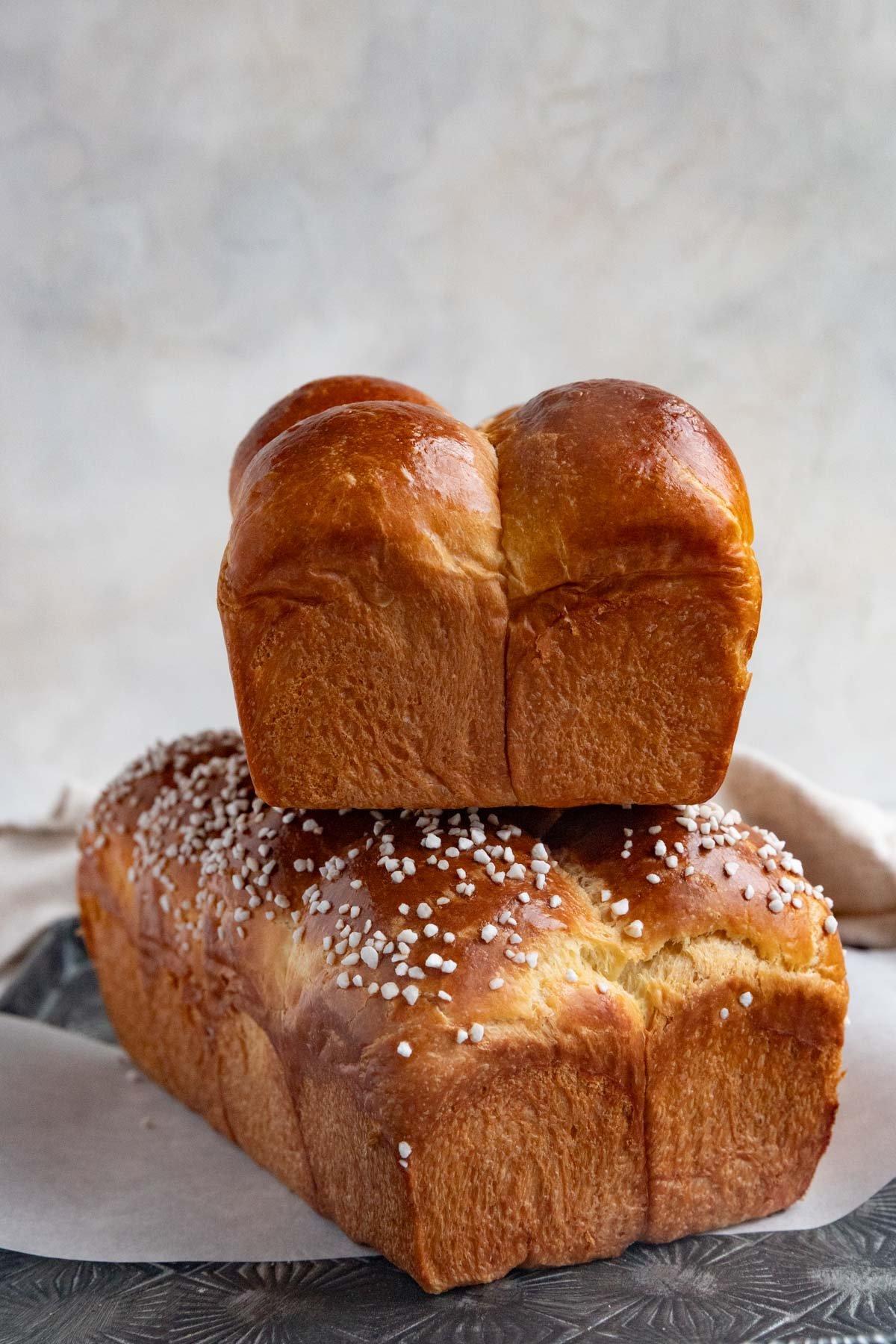
- Brioche Loaf: A classic, beautifully soft bread perfect for slicing. This bread is great for breakfast, or a snack.
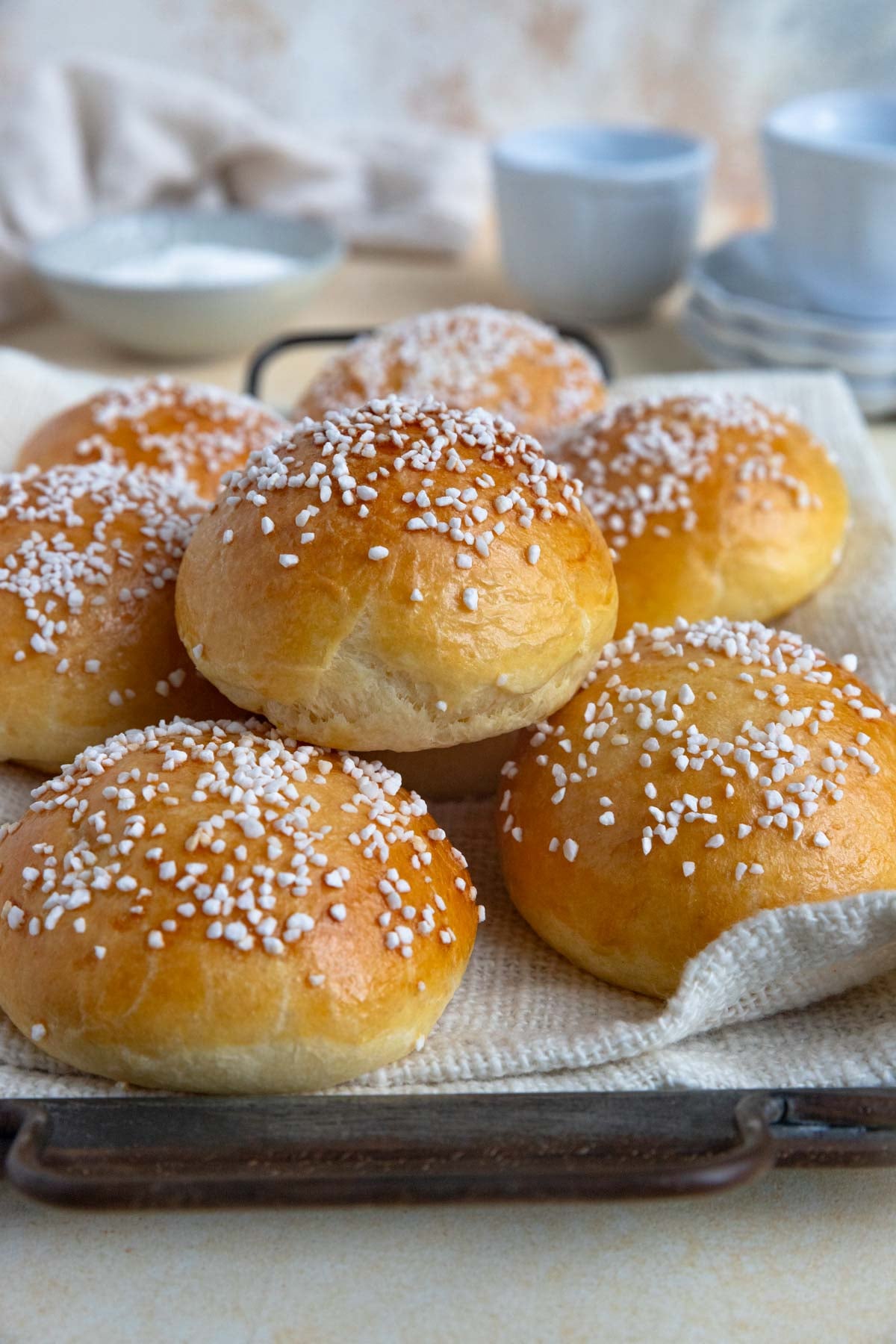
- Brioche au Sucre: A lightly sweetened brioche topped with pearl sugar for a delightful treat. These little buns make a great snack for tea time, or for a gathering with friends.
How to Make Brioche Dough from Scratch
Use this section for process shots, alternating between the step and image showing the step. Users don't like seeing process shots cluttering up the recipe card, so include your process shots here.
1. Make the Preferment
A preferment (a small mixture of flour, milk, and yeast) is used to develop a deeper flavor in the dough. It should rise for at least 45 minutes or until tripled in volume.
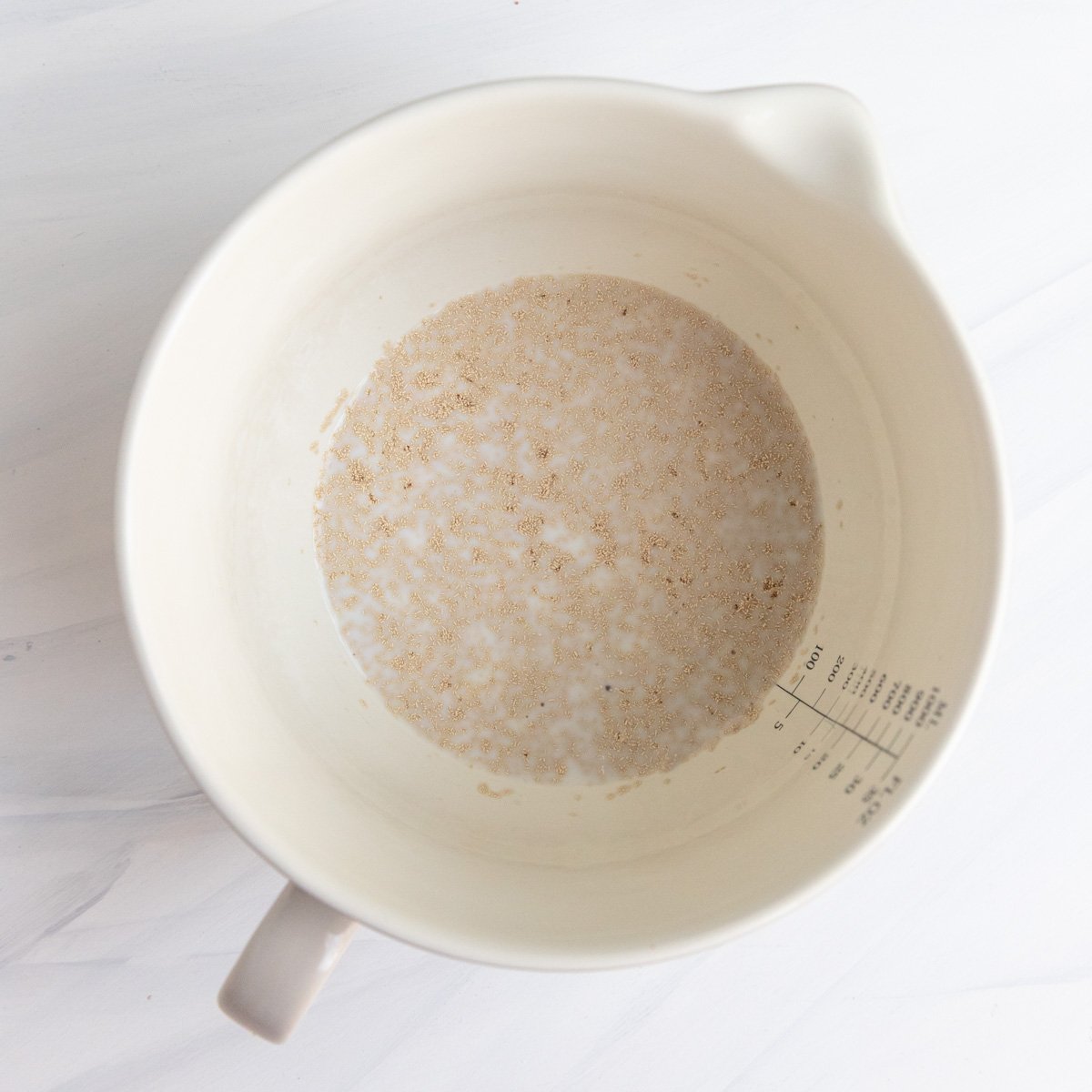
Step 1: Combine the warm milk, sugar, and yeast.
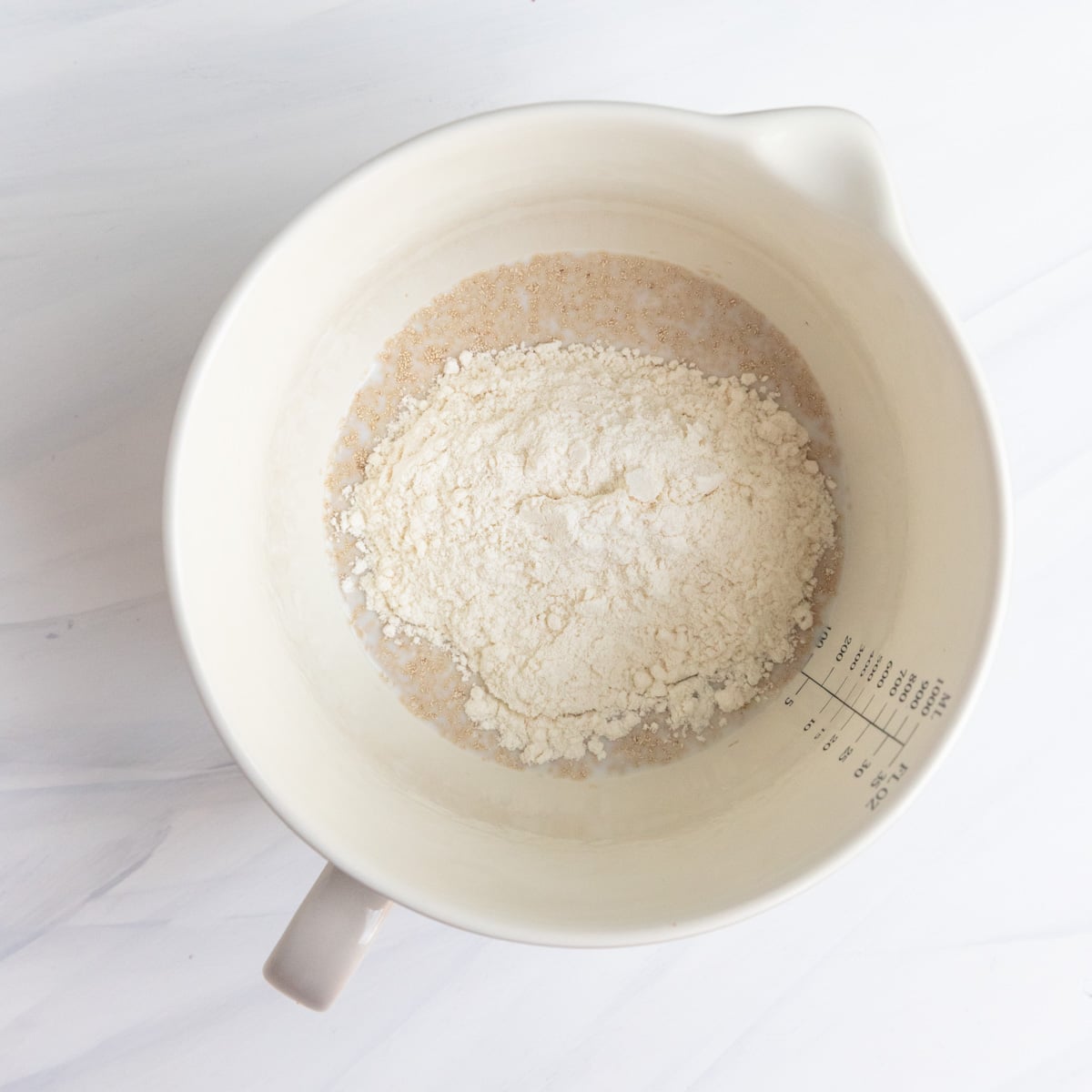
Step 2: Sprinkle the flour on top.
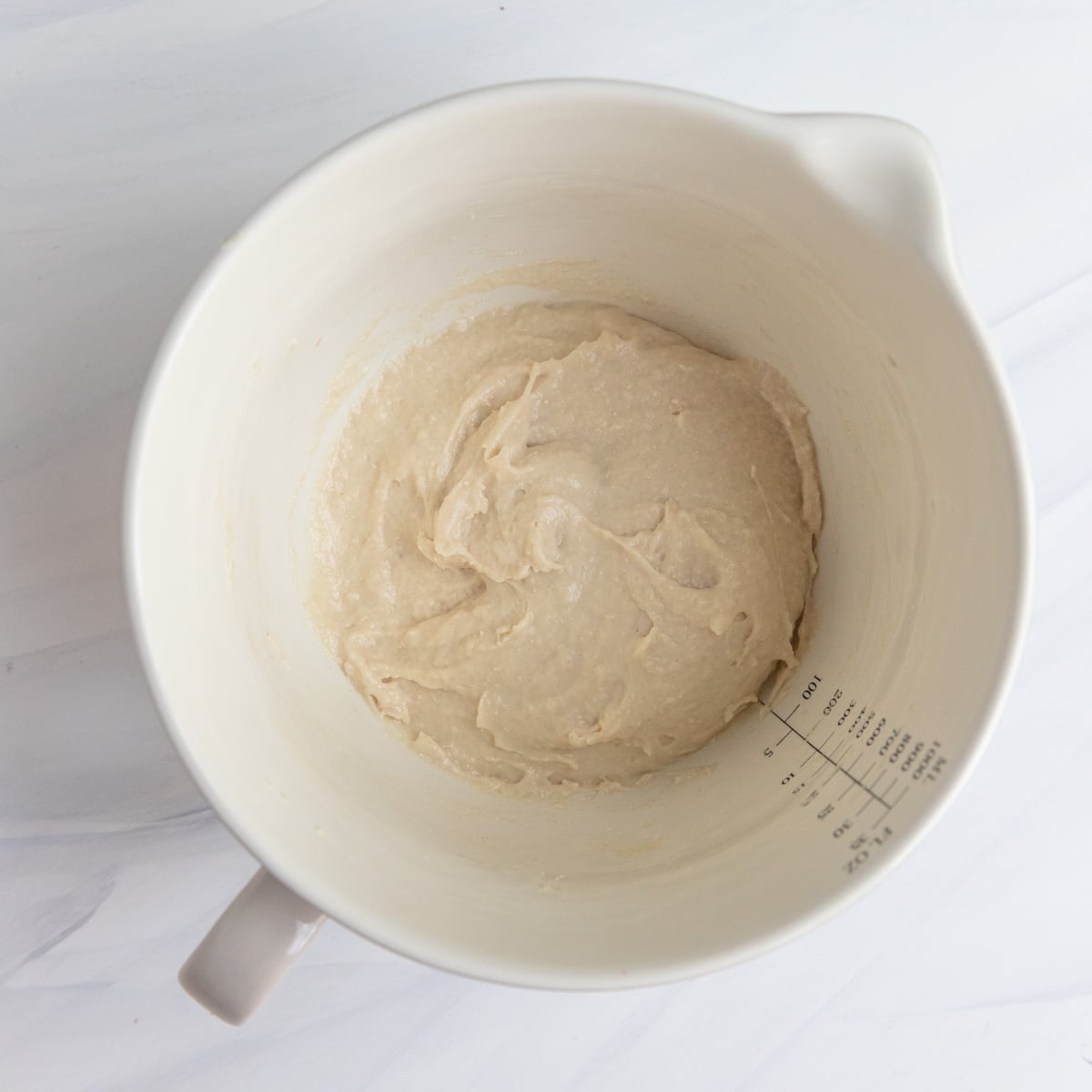
Step 3: Mix the ingredients until the dough is smooth
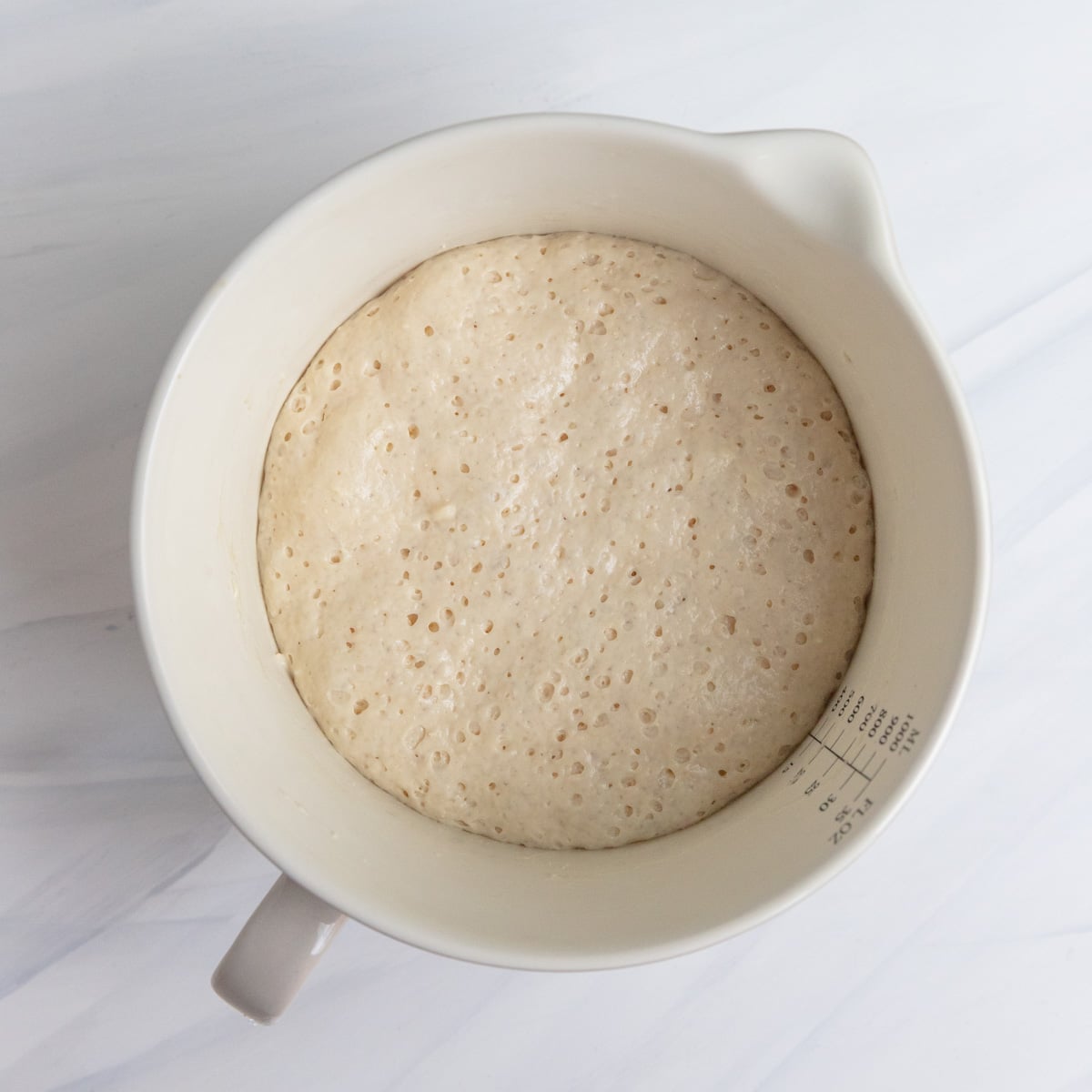
Step 4: Let the ingredients ferment until risen and there are lots bubble.
2. Mix the Dough
The preferment is combined with the remaining flour, eggs, milk, sugar, and salt. Knead in a stand mixer on low speed until the dough passes the window pane test.

Step 5: Combine the dry ingredients in a mixing bowl
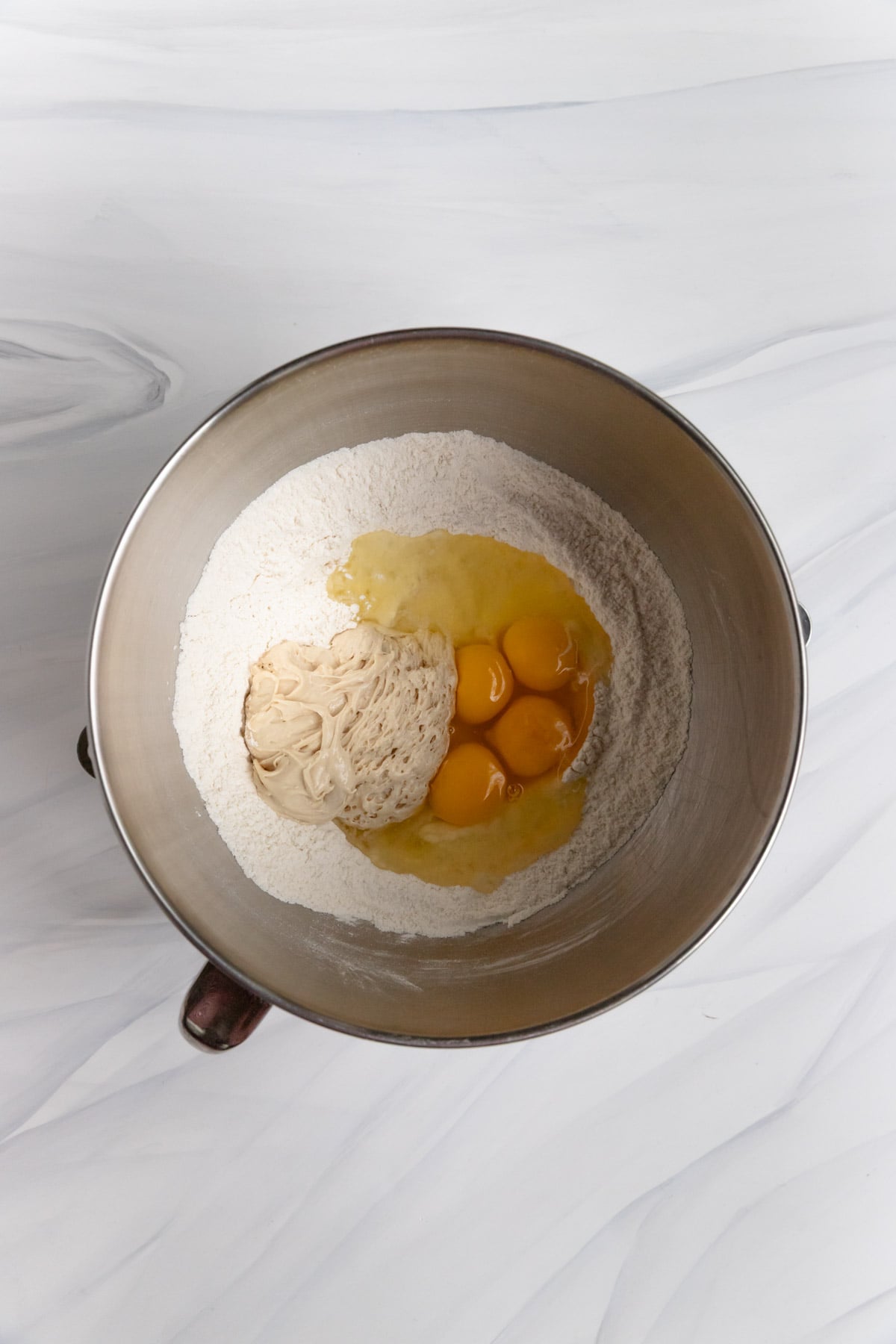
Step 6: Add the eggs, and the preferment.
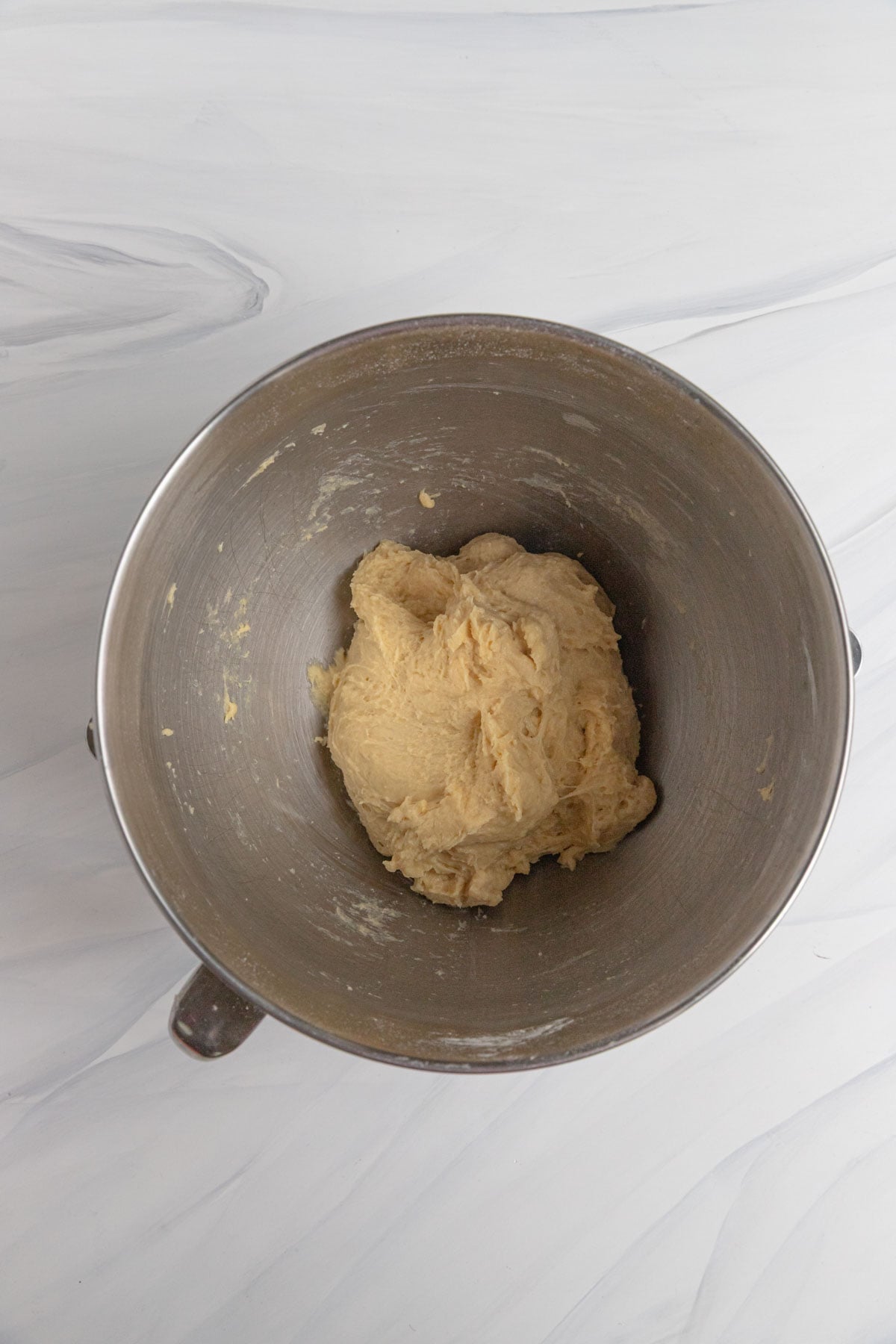
Step 7: Mix the ingredients until they come together
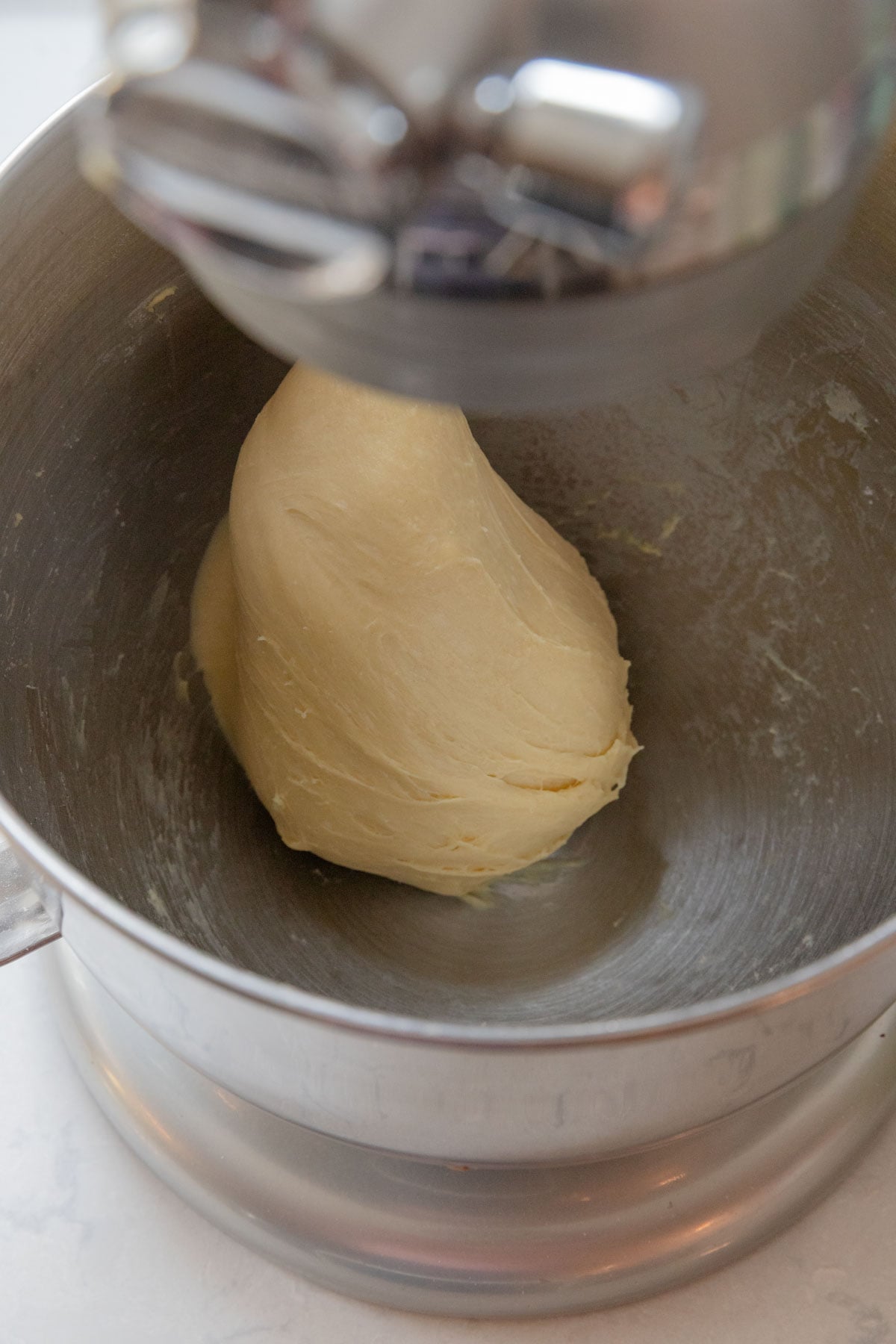
Step 8: Mix the dough until it is elastic
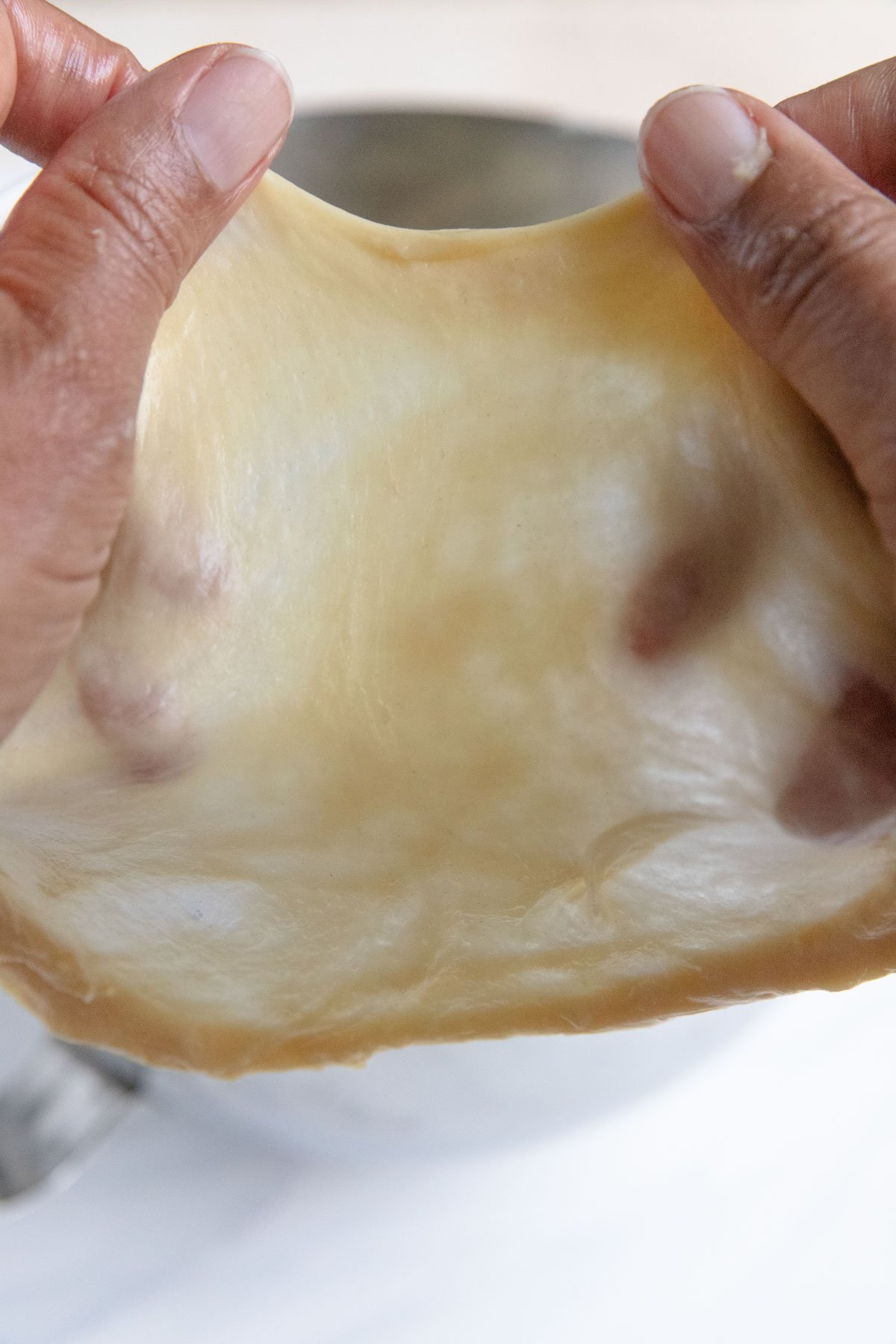
Step 9: Perform the window pane to ensure the dough is elastic enough. You should be able to see through the dough.
3. Rest the Dough
Step 10: Let the dough rest for 15 minutes before adding the butter. This step makes it easier to incorporate the butter.
4. Incorporate the Butter
This process takes patience. At first, the butter will sit on top of the dough, but eventually, it will work into it smoothly.
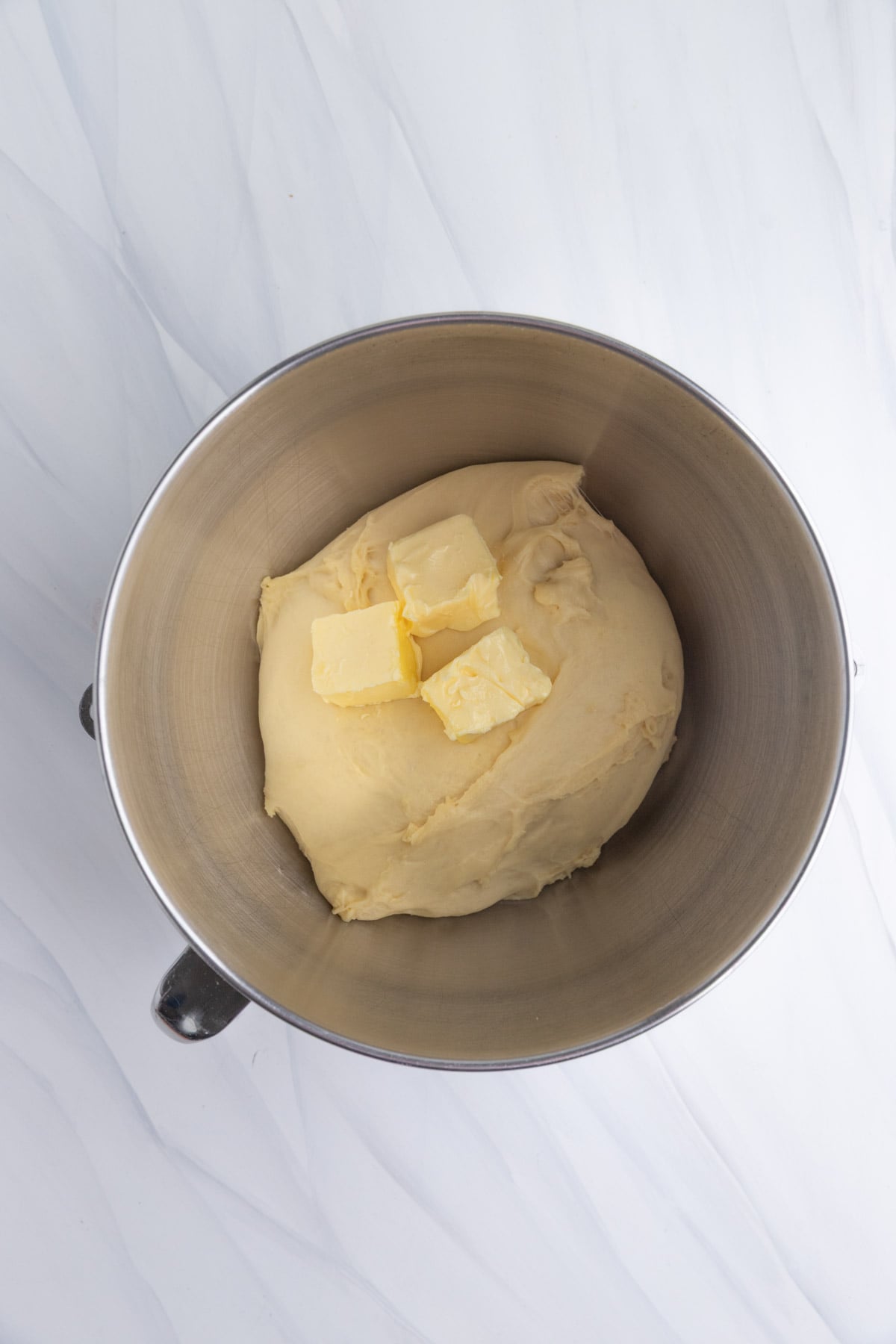
Step 11: Add the butter in one-third increments.
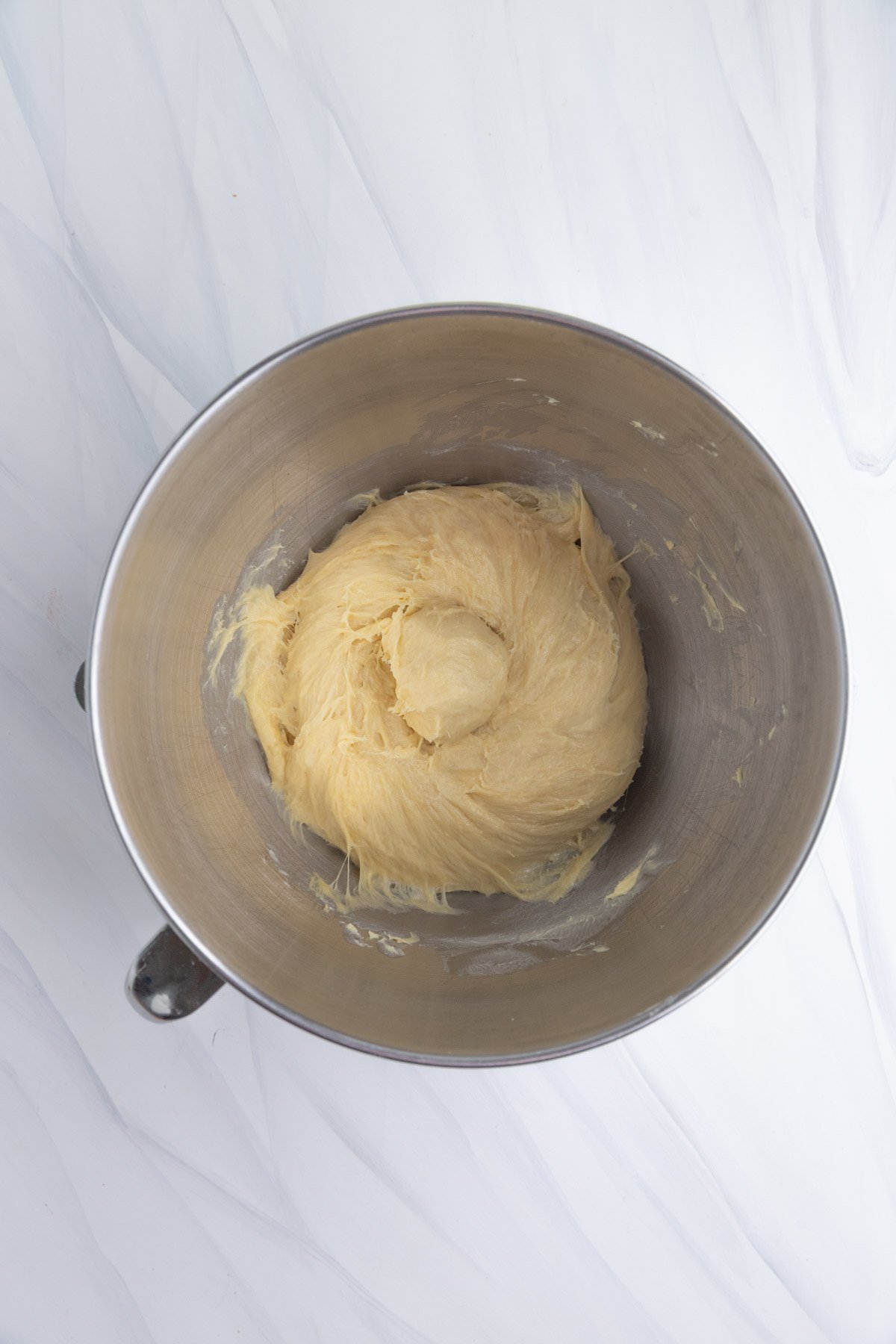
Step 12: Be patient as it will take a while for the butter to full incorporate.
Step 13: Once all the butter is incorporated, continue kneading until the dough passes the window pane test again.
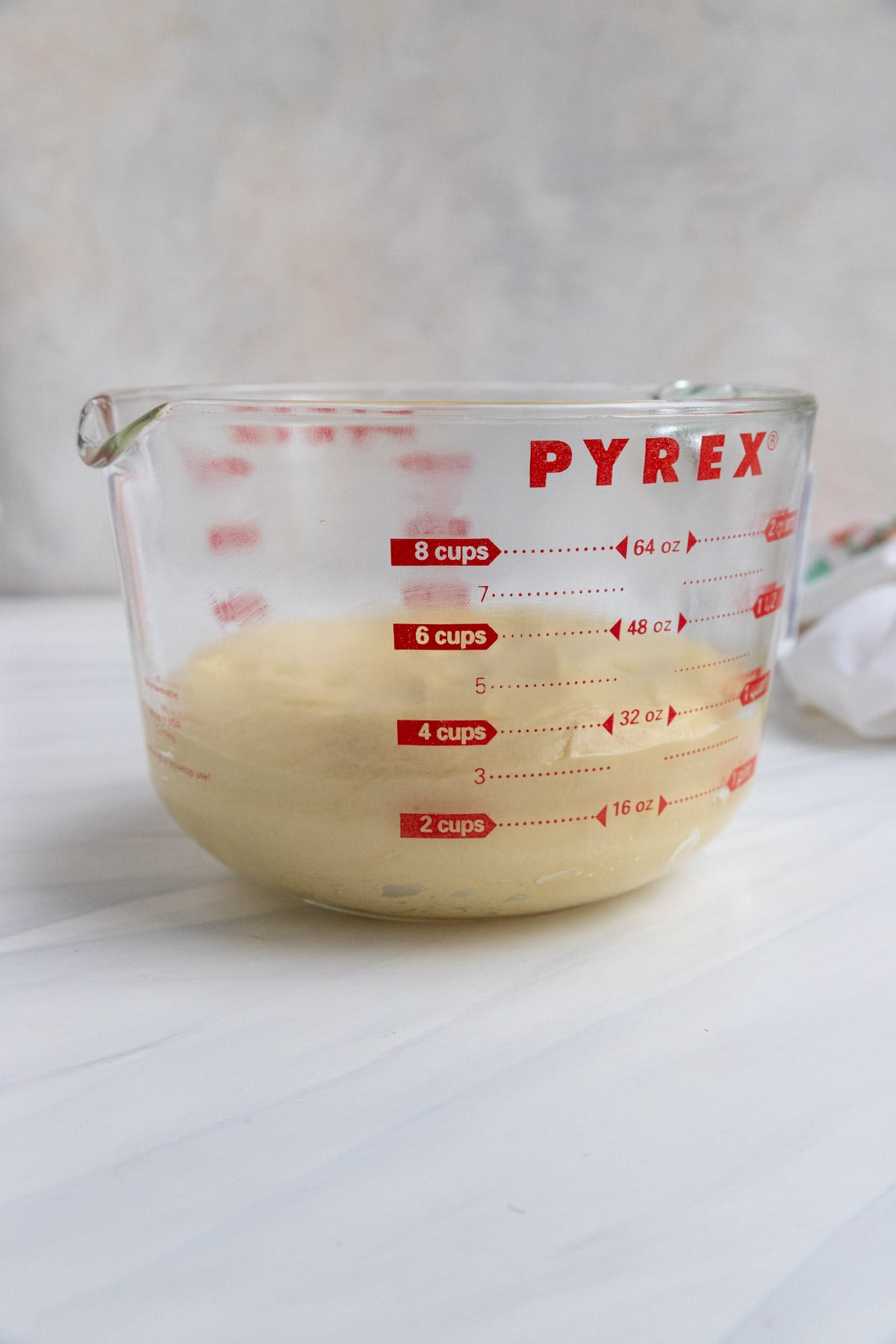
Step 14: Place the dough in an oil container.
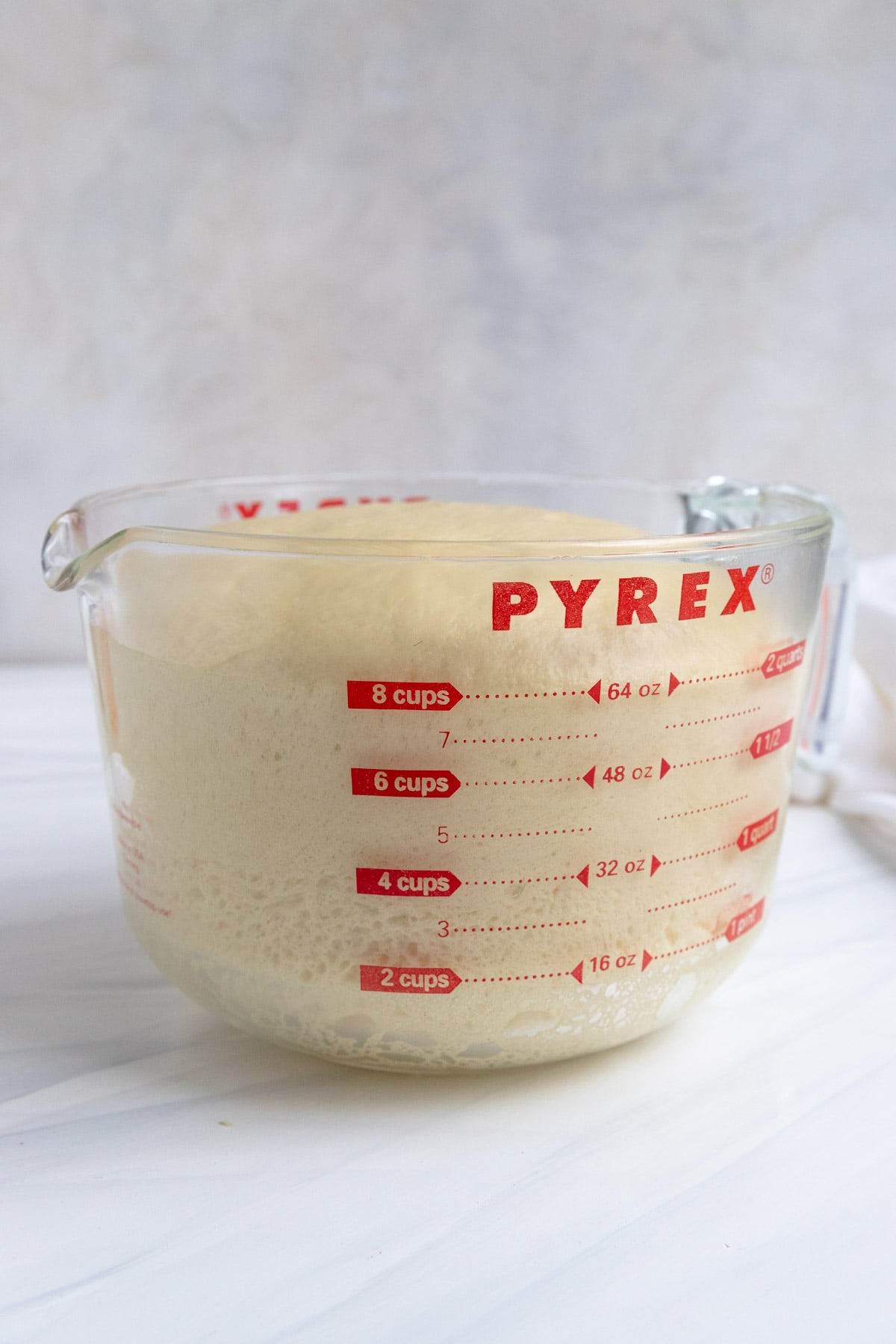
Step 15: Let the dough rise until it has doubled in bulk.
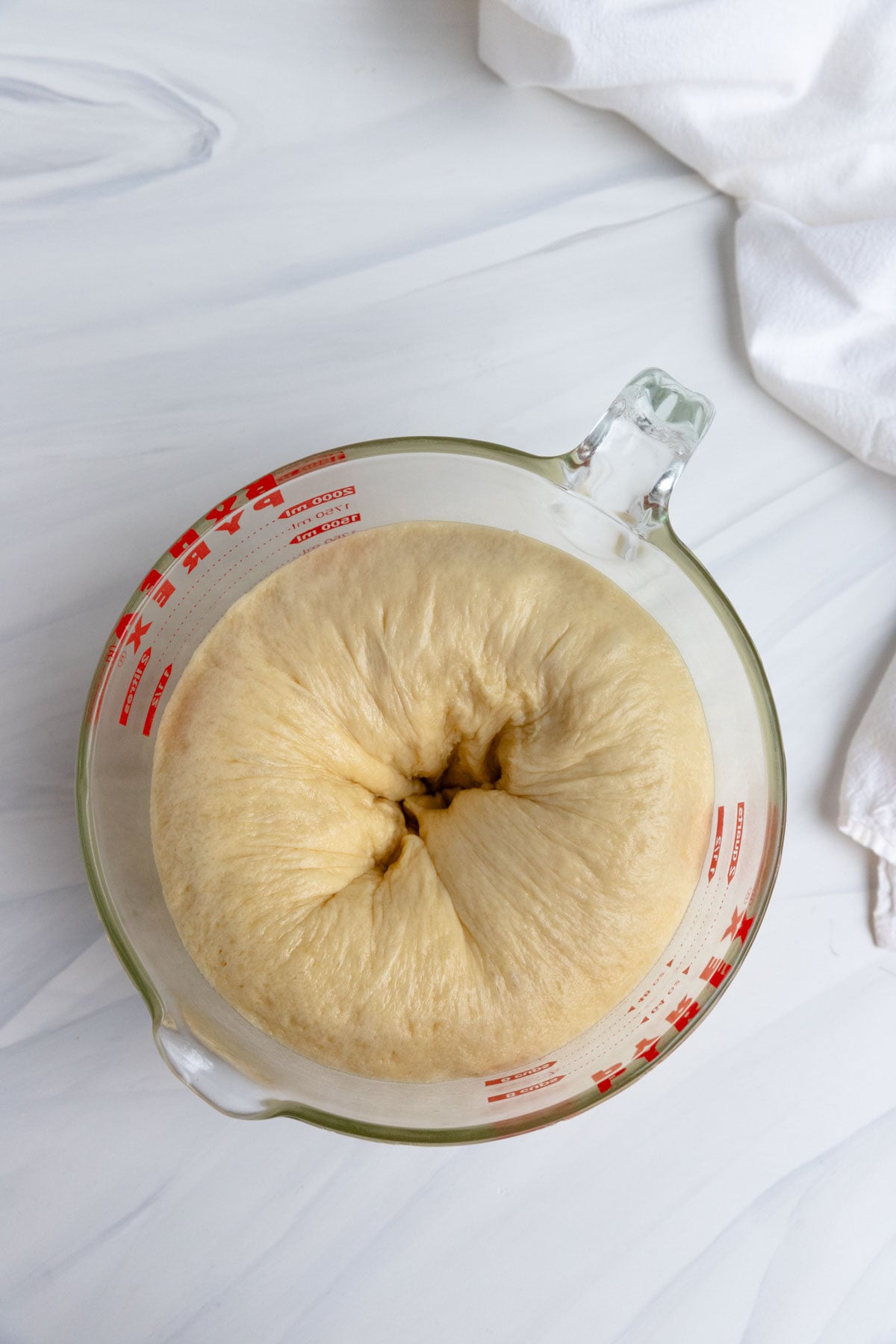
Step 16: Punch down the dough to release gases.
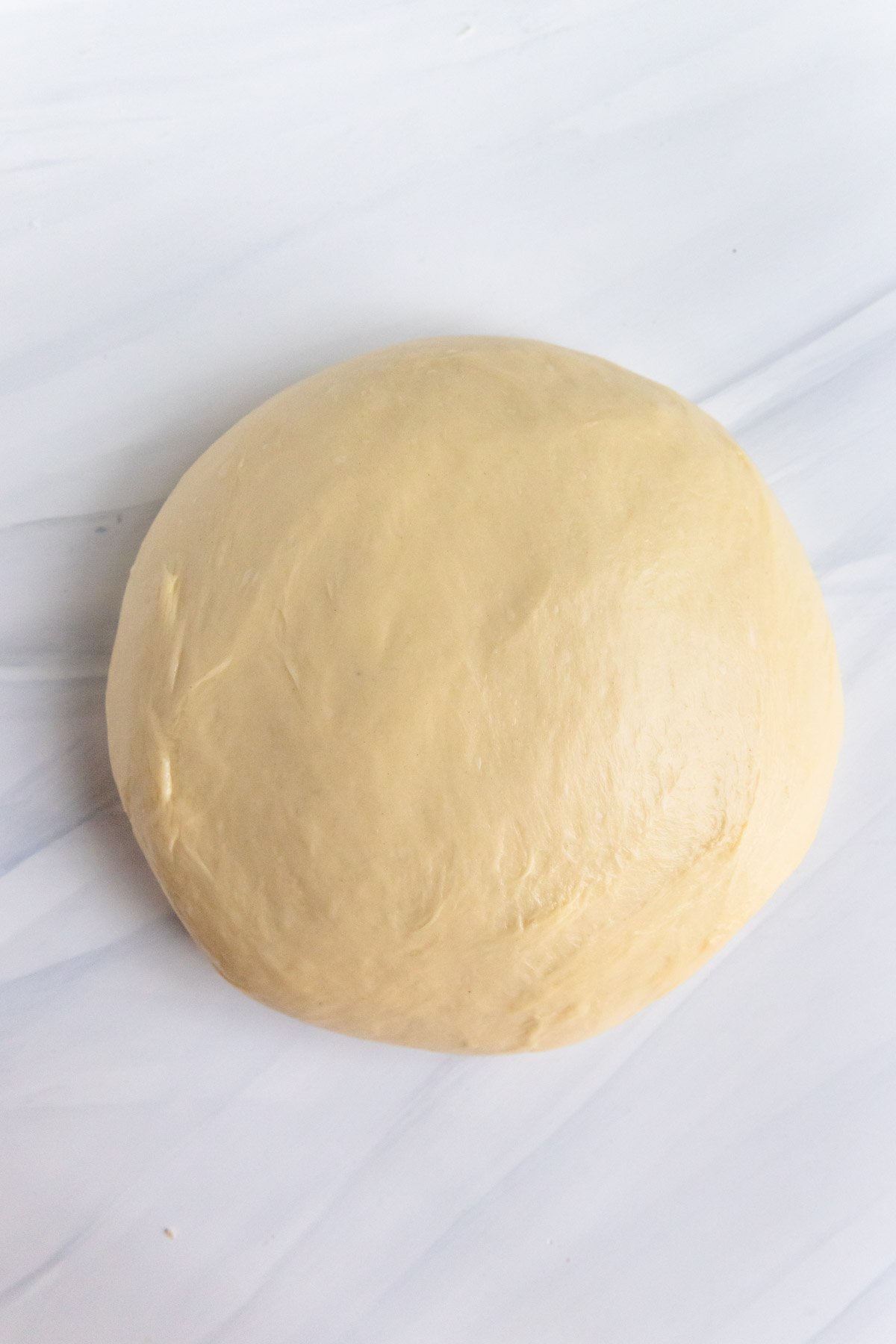
Step 17: Knead and shape the dough into a smooth ball.
5. Chill the Dough
Step 18: Refrigerate the dough for at overnight or up to 24 hours. The long fermentation develops even more flavor. If you're in a hurry you can use the dough after 4 hours. It will be cold enough to handle.
Did you make this recipe? If you have questions about making brioche dough, please leave a comment below. And if you made and enjoyed it please leave a rating and a comment below.
Connect with me on Instagram and tag me @bakesbybrownsugar to share your recipe remake photos.
Like what you see? Click here to subscribe to Bake's by Brown Sugar Baking Newsletter to get free and delicious treats delivered to your inbox.
Want to Save This Recipe?
Enter your email below and I'll send it to your inbox. Plus get new and recommended recipes sent to you every week!
By submitting this form, you consent to receive emails from Bakes by Brown Sugar.

How to Make Brioche Dough (Step-by-Step Guide)
Equipment
- 8-Cup Measuring Cup
Ingredients
Preferment
- 1/2 cup (60 grams) unbleached all-purpose flour
- 1/3 cup (80 ml) whole milk heated to 80-100°F
- 2-1/4 teaspoons (10 grams) active dry yeast
Dough
- 1-1/2 cups (188 grams) bread flour
- 1-1/4 cups (158 grams) unbleached all-purpose flour
- 3 tablespoons (38) grams sugar
- 4 large (200 grams) eggs cold
- 1-1/4 teaspoons Diamond kosher salt
- 14 tablespoons (200 grams) unsalted butter room temperature at 65-68°F
Instructions
- This dough makes 920 grams of dough, enough for two 8.5x4.5-inch bread loaves or 16 rolls.
Make the Preferment
- Warm the milk to 80-100°F. In a medium sized bowl whisk together the yeast and the milk. Add the all-purpose flour and mix with a spoon until the mixture is smooth. Cover it with plastic wrap and let it ferment for 45 minutes. If the yeast is good, the preferment will easily triple in volume and the top will be covered with air bubbles.
Make the Dough
- Place the butter in a bowl and beat it until smooth and creamy, using either a hand mixer or a spatula. Refrigerate until it has cooled to 65-68°F.
- Place the bread flour and all-purpose flour in the bowl of a stand mixer and whisk to combine. Add the sugar, kosher salt, the eggs and the preferment to the flour. With the paddle attachment, mix the ingredients together on medium speed for 1 minute until the ingredients come together. If the dough is lumpy, add 1 tablespoon of milk at a time and mix until each tablespoon of milk is incorporated and the dough is no longer lumpy. Usually 1 additional tablespoon is enough. You don't want to start with lumpy dough because it will stay lumpy through out the process.
- Change to the dough hook and mix on low speed (2 on a KitchenAid mixer) for about 16-18 minutes until the dough is elastic and has pulled away from the sides of the bowl. Every 5 minutes scrape the sides and bottom of the bowl.
- To determine if the dough is ready take a small piece about the size of a golf ball, and gently stretch the dough until it is thin and light passes through the dough. If it tears it is not ready. If it doesn't pass the window pane test, mix the dough for another 3-5 minutes.
- Note: Because there is so much butter in this recipe it is important that the dough is elastic, so it can absorb the butter.
- Once the dough has passed the window pane test, remove the dough from the mixing bowl and place it in a small bowl covered with a towel and let it rest for 15 minutes. This rest will relax the dough and make it easier to absorb the butter.
- While the dough is resting, wash the dough hook and mixing bowl so there are no dry hard pieces of dough that get mixed in with the dough.
Add the Butter
- Place the dough back into the mixing bowl. Add the 1/3 of the butter in the middle of the dough. Mix on low speed until the butter is incorporated.
- The butter may smear at first; and possibly work its way from the middle of the dough to the sides of the bowl, so every few minutes, stop the mixer and use a dough scraper to scrape the sides of the bowl and push the dough and butter together towards the center. Continue to add the butter 1/3 at a time and mix until each batch is incorporated.
- After about 16-18 minutes, the dough will start to pull away from the sides of the bowl.
- Once the dough has completely pulled away from the sides of the bowl it is ready. The dough should be shiny, soft, pliable, and cool to the touch and only slightly sticky. The dough should not stick to your fingers. Total mixing time will be about 20-22 minutes.
First Dough Rise
- Place the dough in a lightly greased 8-cup measuring cup. Lightly press the dough down, it should come up to the 4-cup mark on the measuring cup. Let the dough rise in a warm spot, until doubled. It should reach the 8-cup mark.
- Punch the dough down by pressing your fist gently into the center to deflate it. Turn the dough out onto a lightly floured work surface. Using the heel of your hand, gently knead the dough for 1-2 minutes, folding it over itself several times, until it forms a smooth, cohesive ball. This brief kneading redistributes the yeast and creates an even texture throughout the dough.
- Place it in the refrigerator in large bowl and let it chill for at least 6 hours and up to 24 hours. Refrigerating the dough slows down the fermentation process, leading to a more complex flavor and better texture for the bread.
Using the Dough
- Follow the instructions in the these recipes to make Brioche Loaves or Brioche Sugar Buns. You can also use it to make cinnamon rolls.
- Note: If you're in a hurry, you can shape the dough after just 2 hours of chilling. It will be easier to handle at this point. While it won't have as much developed flavor as an overnight chill, it will still taste delicious.

Pea Primus says
Great easy to make. Had granddaughter help. Recipe was easy to follow and read. Will make again.
Cheryl Norris says
Hi Pea
Thank you for trying this brioche recipe and letting me know how it turned out. Even after all my testing, I was so nervous to post this recipe because it's my most complex to date so comments like yours brings a smile to my face.
Gloria Otero says
Dear Cheryl you are an amazing cook and teacher . I have find you through Anja from OURGABLEDHOME Thanks for the recipe and the steps with the pictures so well explained. I did the bread and made a few mistakes in adding the butter too warm and then loosing texture an size at the end, but the same I continue and the result was great! Very ease when you take practice. Thanks again from Argentina.
Cheryl Norris says
Hi Gloria
I love the Our Gabled Home website. Anja makes sourdough so approachable. Thank you for the huge compliment on being an "amazing cook and teacher." I appreciate and love that compliment. I'm so glad you tried this recipe and enjoyed it.