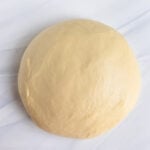
How to Make Brioche Dough (Step-by-Step Guide)
This step-by-step guide will show you how to make brioche dough that will produce buttery tender brioche loaves and other treats.
Servings: 2 pounds
Calories: 2789kcal
Equipment
- 8-Cup Measuring Cup
Ingredients
Preferment
- 1/2 cup (60 grams) unbleached all-purpose flour
- 1/3 cup (80 ml) whole milk heated to 80-100°F
- 2-1/4 teaspoons (10 grams) active dry yeast
Dough
- 1-1/2 cups (188 grams) bread flour
- 1-1/4 cups (158 grams) unbleached all-purpose flour
- 3 tablespoons (38) grams sugar
- 4 large (200 grams) eggs cold
- 1-1/4 teaspoons Diamond kosher salt
- 14 tablespoons (200 grams) unsalted butter room temperature at 65-68°F
Instructions
- This dough makes 920 grams of dough, enough for two 8.5x4.5-inch bread loaves or 16 rolls.
Make the Preferment
- Warm the milk to 80-100°F. In a medium sized bowl whisk together the yeast and the milk. Add the all-purpose flour and mix with a spoon until the mixture is smooth. Cover it with plastic wrap and let it ferment for 45 minutes. If the yeast is good, the preferment will easily triple in volume and the top will be covered with air bubbles.
Make the Dough
- Place the butter in a bowl and beat it until smooth and creamy, using either a hand mixer or a spatula. Refrigerate until it has cooled to 65-68°F.
- Place the bread flour and all-purpose flour in the bowl of a stand mixer and whisk to combine. Add the sugar, kosher salt, the eggs and the preferment to the flour. With the paddle attachment, mix the ingredients together on medium speed for 1 minute until the ingredients come together. If the dough is lumpy, add 1 tablespoon of milk at a time and mix until each tablespoon of milk is incorporated and the dough is no longer lumpy. Usually 1 additional tablespoon is enough. You don't want to start with lumpy dough because it will stay lumpy through out the process.
- Change to the dough hook and mix on low speed (2 on a KitchenAid mixer) for about 16-18 minutes until the dough is elastic and has pulled away from the sides of the bowl. Every 5 minutes scrape the sides and bottom of the bowl.
- To determine if the dough is ready take a small piece about the size of a golf ball, and gently stretch the dough until it is thin and light passes through the dough. If it tears it is not ready. If it doesn't pass the window pane test, mix the dough for another 3-5 minutes.
- Note: Because there is so much butter in this recipe it is important that the dough is elastic, so it can absorb the butter.
- Once the dough has passed the window pane test, remove the dough from the mixing bowl and place it in a small bowl covered with a towel and let it rest for 15 minutes. This rest will relax the dough and make it easier to absorb the butter.
- While the dough is resting, wash the dough hook and mixing bowl so there are no dry hard pieces of dough that get mixed in with the dough.
Add the Butter
- Place the dough back into the mixing bowl. Add the 1/3 of the butter in the middle of the dough. Mix on low speed until the butter is incorporated.
- The butter may smear at first; and possibly work its way from the middle of the dough to the sides of the bowl, so every few minutes, stop the mixer and use a dough scraper to scrape the sides of the bowl and push the dough and butter together towards the center. Continue to add the butter 1/3 at a time and mix until each batch is incorporated.
- After about 16-18 minutes, the dough will start to pull away from the sides of the bowl.
- Once the dough has completely pulled away from the sides of the bowl it is ready. The dough should be shiny, soft, pliable, and cool to the touch and only slightly sticky. The dough should not stick to your fingers. Total mixing time will be about 20-22 minutes.
First Dough Rise
- Place the dough in a lightly greased 8-cup measuring cup. Lightly press the dough down, it should come up to the 4-cup mark on the measuring cup. Let the dough rise in a warm spot, until doubled. It should reach the 8-cup mark.
- Punch the dough down by pressing your fist gently into the center to deflate it. Turn the dough out onto a lightly floured work surface. Using the heel of your hand, gently knead the dough for 1-2 minutes, folding it over itself several times, until it forms a smooth, cohesive ball. This brief kneading redistributes the yeast and creates an even texture throughout the dough.
- Place it in the refrigerator in large bowl and let it chill for at least 6 hours and up to 24 hours. Refrigerating the dough slows down the fermentation process, leading to a more complex flavor and better texture for the bread.
Using the Dough
- Follow the instructions in the these recipes to make Brioche Loaves or Brioche Sugar Buns. You can also use it to make cinnamon rolls.
- Note: If you're in a hurry, you can shape the dough after just 2 hours of chilling. It will be easier to handle at this point. While it won't have as much developed flavor as an overnight chill, it will still taste delicious.
Notes
Temperature matters: Keep ingredients at the specified temperatures. Cold eggs help keep the dough cool, prevent the butter from melting during mixing, while room temperature butter should be soft enough to easily cream.
Using an 8-Cup Measuring Cup: Using a measuring cup or a container with lines indicating the amount is a good way to tell when the dough has doubled. You can also use a large bowl.
Window pane test: To check if your dough is properly developed, stretch a small piece between your fingers. It should be thin enough to see light through without tearing. This ensures the gluten is well-developed to support the butter incorporation.
Butter incorporation is key: Don't rush adding the butter. If added too quickly, the dough may break and appear curdled. If this happens, continue mixing on low speed, it will eventually come together.
Troubleshooting sticky dough: If the dough seems too sticky during shaping, lightly dust your hands (not the counter) with flour. The slight stickiness against the counter actually helps create tension in the dough balls.
Nutrition
Calories: 2789kcal | Carbohydrates: 270g | Protein: 38g | Fat: 175g | Saturated Fat: 109g | Polyunsaturated Fat: 8g | Monounsaturated Fat: 45g | Trans Fat: 7g | Cholesterol: 469mg | Sodium: 66mg | Potassium: 506mg | Fiber: 8g | Sugar: 49g | Vitamin A: 5329IU | Vitamin C: 0.01mg | Calcium: 194mg | Iron: 9mg