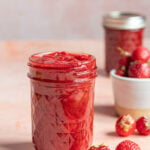
5-Ingredient Strawberry Rhubarb Jam (No Pectin)
Tangy and sweet, this small batch strawberry rhubarb jam is made with just 5 ingredients and no pectin. It has a soft, spreadable texture and a vibrant fruit flavor. Easy to make and freezer-friendly, it's a great way to preserve the best of strawberry and rhubarb season. I can't stop eating it!
Servings: 16 servings
Calories: 26kcal
Equipment
- Half-pint jars
Ingredients
- 12 ounces (340 grams) sliced rhubarb
- 12 ounces (340 grams) sliced strawberries
- 2 tablespoons (30 ml) fresh-squeezed lemon juice
- 1-1/4 cups (250 grams) granulated sugar
- 1-1/2 teaspoons vanilla extract
Instructions
- Recipe Prep: Clean two 8-ounce jars with hot soapy water. Thoroughly rinse the jars and dry with a clean dish towel. Rinse the strawberries, then pat them dry. Chop off the leafy and root ends of the rhubarb. Wash and dry the rhubarb.
- Slice the strawberries into coin shapes or halves depending on their size. Slice the rhubarb into 1/2-inch chunks. You should have 12 ounces of each of strawberries and rhubarb.
- Combine and Macerate: In the saucepan, combine the strawberries, rhubarb, sugar, and lemon juice. Gently stir to combine. Let the mixture sit at room temperature for 30 minutes, stirring occasionally. This will draw out the juices from the strawberries and rhubarb and start to dissolve the sugar.
- Cook: Place the saucepan over high heat and bring to a boil. Once it starts to boil, reduce the heat to medium and cook stirring occasionally.
- Cook the jam until it reaches 214-216°F (101-102°C). This is the temperature at which the jam will set properly with this amount of sugar. Use an instant-read thermometer to check the temperature. The jam should be thick and most of the liquid should have cooked off.
- Stir in Vanilla: Once the jam has reached the desired temperature stir in the vanilla and cook for 1 more minute, then remove saucepan from the heat.
- Store the Jam: Let the jam cool for about 10 minutes, then transfer the jam to the clean jars. Let the jam cool to room temperature and then refrigerate for up to 2-3 weeks.
- Freezing the Jam: If you want to freeze the jam, fill the jars but leave a 1/2-inch headspace. Let the jam cool completely. Refrigerate the jars overnight, then place them in the freezer. Chilling the jars first will help prevent cracking from temperature shock.
Notes
Taste your strawberries: If they’re sweet, the recipe works as written. If they’re tart or bland, you may want to add a bit more sugar to balance the flavor.
Cooking the jam: Most jams are cooked to 220°F because that is the gel point where the sugar, pectin, and acid combine to create a thick jam. In those recipes the sugar is at least 50% the weight of the fruit. But since there is less sugar in this recipe (36% the weight of the fruit) it's cooked to lower temperature (216°F) because there is not enough sugar to reach 220°F without possibly burning the jam. The jam won't thicken as much, but it will still be spreadable.
Nutrition
Calories: 26kcal | Carbohydrates: 6g | Protein: 0.3g | Fat: 0.1g | Saturated Fat: 0.01g | Polyunsaturated Fat: 0.1g | Monounsaturated Fat: 0.02g | Sodium: 1mg | Potassium: 96mg | Fiber: 1g | Sugar: 5g | Vitamin A: 24IU | Vitamin C: 15mg | Calcium: 22mg | Iron: 0.1mg