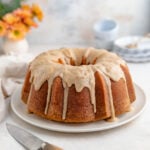
Velvety Sour Cream Pound Cake
This incredibly moist and tender cake is easier to make than you think and so delicious. For my take on this classic pound cake, I added extra vanilla (a traditional ingredient in this cake) and ground cardamom, which adds a subtle spice to the cake. The cake is finished with a brown butter glaze adding a salty sweet note to the cake.
Servings: 16
Calories: 478kcal
Ingredients
Bundt Pan Coating
- Vegetable shortening
- All-Purpose Flour
Cake Batter
- 3 cups (375 grams) unbleached all-purpose flour sifted
- 1/2 teaspoon baking soda
- 1 teaspoon Diamond Crystal kosher salt
- 3 cups (600 grams) granulated sugar
- 12 tablespoons (169 grams) unsalted butter room temperature
- 4 tablespoons + 1 teaspoon (57 grams) refined coconut oil
- 3/4 teaspoon ground cardamom
- 1 tablespoon pure vanilla extract
- 6 large (300 grams) eggs
- 1 cup (242 grams) full-fat sour cream room temperature
Vanilla Soaking Syrup
- 3 tablespoons (38 grams) granulated sugar
- 3 tablespoons (45ml) water
- 1/2 teaspoon pure vanilla extract
Brown Butter Glaze (Optional)
- 8 tablespoons (113 grams) unsalted butter
- 10 tablespoons (75 grams) powdered sugar sifted
- 1/2 teaspoon kosher salt
- 1 teaspoon vanilla extract
Instructions
- Preheat the oven to 325°F (160°C). Place a wire cooling rack on the oven rack. The rack will keep the bundt pan level.
Prepare the Bundt Pan
- With a paper towel or pastry brush generously coat the interior of the bundt pan with Crisco vegetable shortening or similar product. Make sure to get into all the nooks and crannies of the design. Pay special attention to the center tube.
- Add 2 tablespoons of flour to the pan and tilt and rotate the pan to evenly coat all greased surfaces with flour. Tap out any excess flour over the sink or a paper towel.
- Hold the pan up to the light and inspect to ensure no bare spots remain. If needed, touch up any areas with more shortening and flour.
Make the Cake Batter
- Sift the flour into a large bowl. Add the baking soda, and salt, and whisk together for about 30 seconds.
- Place the sugar, butter, coconut oil, cardamom, and vanilla extract in the bowl of a stand mixer. With the paddle attachment mix the ingredients on low speed for 30 seconds. Increase the mixer speed to medium and beat for 4 minutes and 30 seconds until the mixture is creamy and fluffy.
- Scrape the sides and bottoms of the bowl. Add the eggs, one at a time, beating on medium speed for 20 seconds or until each egg is well incorporated. Scrape down the sides and bottom of the bowl after adding the 3rd egg. After all the eggs are mixed in scrape down the sides and bottom of the bowl.
- Add 1/3 of the flour and mix on low speed (use the Stir setting if using a KitchenAid mixer). Next add 1/2 cup of the sour cream and mix on low speed until incorporated. Alternate the remaining flour and sour cream mixing after each ingredient and ending with the last third of the flour.
- Scrape down the sides and bottom of the bowl. Mix on low speed for 20 seconds to ensure the batter is well combined.
Bake the Cake
- Scoop the batter into the prepared bundt pan. Use an offset spatula to smooth and even out the batter. Place a dish towel under the pan and tap it against the counter 3-4 times. Place the cake in the oven and bake for 60-70 minutes. The top of the cake should be golden brown, covered with cracks (see picture in blog post) and the internal temperature should be about 213°F when measured with an instant-read thermometer.
- Remove the cake from the oven, place it on a wire rack, and let it cool in the pan for 15 minutes. Invert the cake on a parchment line cooling rack. Immediately start brushing the cake with the vanilla soaking syrup until it's all used up.
- Let the cake cool for 2-3 hours (or overnight) before adding a glaze. If you prefer you can add a dusting of powdered sugar.
Make the Vanilla Soaking Syrup
- As soon as the cake comes out of the oven combine the sugar and water in a saucepan. Heat it over medium-high heat just until it begins to simmer and the sugar has dissolved. Remove the pan from the heat and stir in the vanilla extract.
How to Store the Cake (Unglazed)
- Store the cake in a container or other airtight container for up to 3 days. Store it in the refrigerator for up to 5 days. Once the brown butter glaze is added the cake can be stored at room temperature for up to 2 days.
Make the Brown Butter Glaze
- Sift the powdered sugar into a medium-sized bowl and set it aside.
- Place 8 tablespoons (113 grams) of butter, cut into 8 pieces in a saucepan. Use a light-colored saucepan so you can see the milk solids as they brown. Place the saucepan over high heat. As soon as the butter starts to melt, reduce the heat to low. The heat is reduced to low to minimize evaporation and reduce the chance that you will burn the butter.
- As the butter melts, it will pop, and sizzle and the milk solids will begin to separate from the butter fat. Initially the milk solids will sit on top of the butter fat. As the butter continues to cook, the milk solids will start to drop to the bottom of the pan and turn brown.
- Once the amount of milk solid foam begins to lessen start to look for brown pieces on the bottom of the pan. Occasionally stir it so you can clearly see the bottom of the pan.
- Once the amount of milk solid foam begins to lessen start to look for brown pieces on the bottom of the pan. Occasionally stir it so you can clearly see the bottom of the pan.
- Once the butter reaches the right color remove the pan from the heat. Let it cool for 5 minutes. Stir the browned butter into the powdered sugar 1 tablespoon at a time. Continue to stir until the mixture is smooth. Stir in the salt and the vanilla.
- Let the glaze cool to about 90°F. At this point, it will be soft enough to pour over the cake. If it becomes too stiff set the bowl over a pot of simmering water for a few seconds to slowly warm it up. Do not try to reheat it in the microwave. The glaze with split and no amount of stirring will save.
- Spoon the glaze over the cake and serve.
Notes
Mix Dry Ingredients on Low Speed: When it’s time to add the dry ingredients, I mix on low speed to avoid developing the gluten and ensure a tender crumb. There’s no rush, just mix low and slow and have patience as the magic happens.
Room Temperature Ingredients: I always emphasize the importance of using room-temperature ingredients to create a light, fluffy cake. Cold eggs lead to a dense, stodgy texture and cold butter won’t mix well with the sugar.
Cooling the Cake. To ensure you don't let the cake sit too long in the pan once removed from the oven, set a timer for 15 minutes as soon as you remove it from the oven.
Nutrition
Calories: 478kcal | Carbohydrates: 79g | Protein: 5g | Fat: 16g | Saturated Fat: 11g | Polyunsaturated Fat: 1g | Monounsaturated Fat: 3g | Trans Fat: 0.4g | Cholesterol: 34mg | Sodium: 42mg | Potassium: 72mg | Fiber: 1g | Sugar: 45g | Vitamin A: 372IU | Vitamin C: 0.2mg | Calcium: 25mg | Iron: 2mg