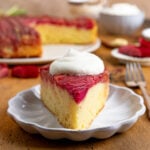
Rhubarb Upside Down Cake (with Orange and Ginger)
Servings: 10 servings
Calories: 379kcal
Equipment
- 9x2-inch Round Cake Pan
- Microplane Grater
Ingredients
Rhubarb Topping
- 4 tablespoons (57 grams) unsalted butter melted
- 1/3 cup (67 grams) granulated sugar
- 1/3 cup (67 grams) packed light brown sugar
- 1 pound (454 grams) rhubarb stalks cut into pieces to fit a 9-inch cake pan
Make the Cake
- 1-1/2 cups + 2 tablespoons (200 grams) unbleached all-purpose flour
- 1-1/2 teaspoons baking powder
- 1 teaspoon ground ginger
- 1/2 teaspoon Diamond kosher salt
- 1 cup (200 grams) granulated sugar
- 1-1/2 teaspoons (3 grams) orange zest
- 1/2 cup (113 grams) unsalted butter room temperature
- 2 large (100 grams) eggs room temperature
- 1-1/2 teaspoons vanilla extract
- 3/4 cup (180 grams) sour cream room temperature
Instructions
Mise en Place
- Wash and trip the rhubarb pieces and fit them into the pan before prepping the pan and adding the butter. Remove the pieces and lay them in the same order they'll be added back to the pan on top of the sugar layer.
Prepare Cake Pan
- Preheat the oven to 350°F. Butter and flour a 9x2-inch round cake pan. Line the bottom with parchment paper.
Make the Rhubarb Topping
- Melt the butter and pour it into the cake pan, tilting the pan to spread the butter evenly across the bottom. Whisk together the granulated sugar and brown sugar, then sprinkle the sugar mixture across the bottom of the pan, creating an even layer. Lightly press the sugar into the butter. Arrange the rhubarb pieces in the pan in a single layer, cutting pieces as needed to fit snugly.
Make the Cake Batter
- Place the all-purpose flour, baking powder, ground ginger, and salt in a medium bowl and whisk together.
- Place the sugar in the bowl of a stand mixer. Zest the orange directly into the sugar and use your fingers to rub the zest into the sugar until fragrant. Add the butter and vanilla extract. Beat on medium speed with the paddle attachment until creamy and lighter in color, about 3 minutes. Scrape the sides and bottom of the bowl.
- Add the eggs one at a time, beating after each addition until well combined. Scrape the bottom and sides of the mixing bowl.
- Add 1/3 of the flour mixture and beat on low speed until the flour is just mixed in. Do not overmix. Add half of the sour cream and beat until combined. Add half of the remaining flour and mix on low until just combined. Scrape any flour from the sides of the mixing bowl.
- Add the remaining sour cream, mix on low, then add the remaining flour and mix on low until combined. Scrape the bottom and sides of the bowl and mix on low speed for another 10–20 seconds to make sure everything is well combined.
- Add the cake batter on top of the rhubarb in dollops. Use an offset spatula to gently spread the cake batter across the rhubarb, being careful not to disturb the fruit arrangement.
Bake the Cake
- Place the pan in the oven and bake for 55–60 minutes. The temperature of the cake in the center should be about 200°F.
- Remove from the oven, run a knife around the edge of the pan to loosen the cake and then let it cool in the pan for 10 minutes. Place your serving plate firmly on top of the pan before inverting it. Carefully remove the parchment paper if it sticks to the cake. If any rhubarb pieces stick to the parchment, pull them off and place them back on the cake.
Serving the Cake
- Serve warm or at room temperature. The cake is delicious on its own and also pairs beautifully with lightly sweetened whipped cream or ice cream.
Storage
- Store the cake loosely covered at room temperature for up to 2 days. The rhubarb topping will soften the top layer of the cake slightly as it sits. For longer storage, refrigerate for up to 4 days and bring to room temperature before serving.
Notes
Rhubarb Prep: Rhubarb stalks vary a lot in width, so don’t stress about cutting uniform pieces you’re after a snug, single-layer fit in the pan, not a perfectly symmetrical mosaic. Trim pieces so they lie flat and fill the gaps as best you can. Thicker stalks can be halved lengthwise. One pound of rhubarb is enough to cover a 9-inch pan.
Room temperature ingredients matter: The butter, eggs, and sour cream all need to be at room temperature before you start. Cold butter won’t cream properly, and cold eggs or sour cream can cause the batter to curdle or turn grainy. If you’ve forgotten to pull things out ahead of time, set the eggs in a bowl of warm (not hot) water for 5–10 minutes and cut the butter into small cubes to speed things up.
Why ground ginger works here: Rhubarb is bright and tart, and ground ginger adds a spicy warmth that complements the rhubarb’s tartness and pairs well with the citrusy orange zest. If you want to amplify the ginger, you can add 1 teaspoon of finely grated fresh ginger to the batter along with the dry ingredients.
Use a thermometer to test doneness: The toothpick test is unreliable for a cake this moist — the rhubarb releases liquid during baking, so a toothpick can come out clean while the center is still underdone. Use an instant-read thermometer instead: the center of the cake should register 200–202°F.
Timing the invert: Ten minutes of cooling in the pan is the sweet spot. Too soon and the topping hasn’t set and the cake may fall apart when inverted. Too long and the caramelized sugar will cool and harden and stick to the pan.
Nutrition
Calories: 379kcal | Carbohydrates: 54g | Protein: 3g | Fat: 18g | Saturated Fat: 11g | Polyunsaturated Fat: 1g | Monounsaturated Fat: 5g | Trans Fat: 1g | Cholesterol: 49mg | Sodium: 129mg | Potassium: 188mg | Fiber: 1g | Sugar: 40g | Vitamin A: 603IU | Vitamin C: 4mg | Calcium: 71mg | Iron: 1mg