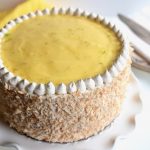
Coconut Cake with Lime Curd Filling
This coconut cake is amazingly delicious. The Triple Coconut Cake from Serious Eats is the basis for this recipe. The tart lime curd is a perfect match with the sweetness of the coconut cake and coconut buttercream. It's the perfect cake for special occasions or just because.
Servings: 16 servings
Calories: 865kcal
Ingredients
Lime Curd
- 2 teaspoons lime zest
- 5 large (100 grams) egg yolks
- 1 cup (200 grams) sugar
- 1/2 cup (120 ml) fresh-squeezed lime juice
- 6 tablespoons (85 grams) unsalted butter room temperature
- 1/8 teaspoon kosher salt
Toasted Coconut
- 1 cup sweetened coconut flakes
Cake Release
- 1 tablespoon (14 grams) unsalted butter
- 1 tablespoon (8 grams) unbleached all-purpose flour
Triple Coconut Cake
- 2-3/4 cups (340 grams) unbleached all-purpose flour
- 2/3 cup (57 grams) coconut flour
- 2-1/4 cups (454 grams) plain or toasted sugar
- 1 tablespoon pure vanilla extract
- 4 teaspoons baking powder
- 2-1/4 teaspoons kosher salt
- 8 tablespoons (113 grams) unsalted butter room temperature, 60-65°F
- 2/3 cup (113 grams) virgin coconut oil creamy and soft, about 72°F
- 3 large (150 grams) eggs room temperature
- 2 1/4 cups (540 ml) full-fat coconut milk
Coconut Swiss Meringue Buttercream
- 6 large (180 grams) egg whites
- 1-3/4 cups (350 grams) turbinado sugar
- 3/4 teaspoon kosher salt
- 2 cups (454 grams) unsalted butter room temperature, 60-65°F
- 2/3 cup (113 grams) virgin coconut oil creamy and soft, about 72°F
- 2 teaspoons pure vanilla extract
Instructions
For the Lime Curd
- Place a strainer over a large bowl, near the stove. Put the lime zest in the bowl.
- In a nonreactive saucepan, combine the eggs yolks and sugar and whisk until well blended. Stir in the lime juice, butter and salt.
- Cook the mixture over medium heat, whisking constantly until the mixture is thickened. It should coat the back of wooden spoon and leave a visible trail when you run your finger through it. When the mixture has thickened and reached a temperature of 185 degrees F pour into the strainer. Press the curd through the strainer with a spatula. Stir in the lime zest.
- Cover the surface of the curd with plastic wrap, gently pressing the plastic wrap onto the surface of the curd. Place the curd in the refrigerator and chill for at least 2 hours.
Prepare the Cake Pans
- Melt the butter in a small bowl, add 1 tablespoon of flour and stir together until it is smooth paste. With a pastry brush thoroughly coat the bottoms and sides of the three 8-inch aluminum cake pans and line them with parchment paper. If you don’t have three pans, it’s okay to bake the cakes in stages; the batter will keep at room temperature until it's needed.
For the Toasted Coconut
- The toasted coconut can be made one week ahead and stored in a plastic or glass container. Preheat the oven to 350 degrees F. Spread the sweetened coconut in a single layer on a 1/4 sheet pan. Bake the coconut for 10-15 minutes until it is golden brown. Stir and toss the coconut every 4 minutes to make sure the coconut browns evenly and doesn’t burn.
For the Coconut Cake
- Preheat to 350°F (180°C).
- Place the all-purpose flour and the coconut flour in a medium bowl and whisk to combine and remove any lumps. If you don’t have coconut flour, replace it with an equal amount of all-purpose flour.
- Crack the three eggs into a bowl large enough to hold all three eggs
- In the bowl of a stand mixer fitted with a paddle attachment, combine sugar, baking powder, salt, vanilla extract, butter, and virgin coconut oil. Mix on low speed to roughly incorporate, then increase to medium and beat until fluffy and light, about 5 minutes. Halfway through, pause to scrape the bowl and beater with a flexible spatula.
- With the mixer still running, add eggs one at a time, letting each fully incorporate before adding the next. Scrape the sides and bottom of the bowl. Add 1/3 of the flour mixture and mix on low speed until incorporated, then add 1/3 of coconut milk and mix until just incorporated. Repeat with remaining flour and coconut milk, working in thirds as before.
- Scrape bowl and beater with a flexible spatula and resume mixing on medium speed for about 5 seconds to ensure everything is well combined. The batter should look creamy and thick, registering between 65 and 68°F on a digital thermometer. (Significant deviation indicates ingredients were too warm or too cold, which can lead to textural problems with the cake.)
- Using a flexible spatula, fold batter once or twice from the bottom up, then divide evenly between prepared cake pans (about 20 ounces or 565g each, if you have a scale).
- Stagger pans together on oven rack and bake until the cakes are firm, pale gold, and begin to pull away from the sides of the pans, about 35 minutes. If your oven heats very unevenly, pause to rotate the pans after about 20 minutes. Alternatively, bake 2 layers at once and finish the third when they’re done.
- Cool cakes in their pans for 15 minutes, then run a butter knife around the edges to loosen. Invert onto a wire rack, peel off parchment, and return cakes right side up. Allow the cakes to completely cool, about 1 hour. (Covered in plastic, the cakes can be left at room temperature for a few hours.) Prepare the frosting.
For the Coconut Swiss Meringue Buttercream
- This recipe makes 6 cups of buttercream.
- Fill a wide pot with at least 1 1/2 inches water, with a thick ring of crumpled tinfoil placed on the bottom to act as a "booster seat" that will prevent the bowl from touching the bottom of the pot. Place over high heat until steaming-hot, then adjust the temperature to maintain a gentle simmer.
- Combine egg whites, turbinado sugar, salt, and vanilla seeds in the bowl of a stand mixer. Set over steaming water, stirring and scraping constantly with a flexible spatula, until egg whites reach 185°F (85°C). This should take only 10 to 12 minutes, so if mixture seems to be moving slowly, simply turn up the heat. Once ready, transfer to a stand mixer fitted with a whisk attachment and whip at high speed about 10 minutes, until meringue is glossy, stiff, and cool to the touch, around 90°F (32°C).
- With mixer still running, add butter, 1 or 2 tablespoons at a time, followed by coconut oil. Initially, the volume of the meringue will decrease; it may even seem soupy along the way, but as the cool butter is added, the mixture will begin to thicken and cool. In the end, the buttercream should be thick, creamy, and soft but not runny, around 72°F (22°C). Mix in vanilla extract on low speed until well combined.
- Use buttercream right away, or transfer to a large zipper-lock bag, press out the air, and seal. Buttercream can be refrigerated for up to 2 weeks and frozen for up to several months. (The main issue with longer storage in the freezer is odor absorption, not spoilage.) Rewarm to 72°F and re-whip before using.
Assemble the Cake
- Level the cakes with a serrated knife. Use a pastry brush to knock off any loose crumbs. Place 1 layer on a cake board or directly on a cake plate. Place the cake board or plate on a cake turntable. Place a decorating tip (Ateco #8) in a piping bag and pipe a buttercream dam around the edge of the cake. Add 3/4 cup of buttercream and spread around the center of the cake. Add 1/3 cup of the lime curd on top the buttercream and gently spread it across the to the buttercream. Add the second layer and repeat with the buttercream and lime curd. Add the third layer on top.
- Cover the entire cake with a thin layer of buttercream to lock in remaining crumbs. This step is called crumb coating and will prevent crumbs from getting into the final buttercream layer. At this point you can either refrigerate the cake for 30 minutes to harden the buttercream or add your final coat of buttercream.
- Coat the sides of the cake with toasted coconut. To coat the sides, take a small handful of coconut and gently press into the side of the cake. Repeat until the cake sides are thoroughly covered. Use a cake spatula to press some of the coconut along the bottom edges of the cake.
- Decorate the top edge of the cake with dots or swirl. This decoration creates the dam for the lime curd. Refrigerate the cake for at least 30 minutes. Remove the cake from the refrigerate and spread the remaining lime curd across the top of the cake up to edge of your decoration.
- Under a cake dome, the cake will keep for 3 days at room temperature. If the cake is refrigerated let the cake sit at room temperature at least an hour before serving.
Notes
Coconut Flour: If you don't have coconut flour you can replace it with an equal amount of all-purpose flour.
Toasted Sugar. The recipe for toasted sugar can be found at Serious Eats.
Substitutions: The first time I made the Triple Coconut Cake I didn't have either coconut flour or toasted sugar and the cake was still delicious. The coconut flour and the toasted sugar make the cake taste richer.
Nutrition
Calories: 865kcal | Carbohydrates: 86g | Protein: 7g | Fat: 57g | Saturated Fat: 40g | Cholesterol: 181mg | Sodium: 520mg | Potassium: 200mg | Fiber: 3g | Sugar: 65g | Vitamin A: 1167IU | Vitamin C: 2mg | Calcium: 73mg | Iron: 2mg